
6 Common Logistics Myths Businesses Need to Stop Believing

.webp)
Key Takeaways
- Delivery speed is not the primary driver of repeat purchases. First-attempt delivery success rate and order accuracy are more reliable performance indicators than the speed of the window itself.
- Warehouse ownership does not determine inventory visibility. Third-party providers with WMS dashboards and real-time syncing often provide stronger data access than informal in-house setups.
- Logistics visibility after outsourcing is a contractual requirement, not a default outcome. Specify tracking tools, exception protocols, and system integration before signing with any provider.
- FTL is not reserved for large enterprises. Route variability, handling damage, and stockout frequency are more relevant FTL signals than company size.
- Logistics providers are not interchangeable. Fulfillment infrastructure, B2B distribution capability, geographic coverage, and technology integration vary in ways that per-shipment price comparisons do not reveal.
- Most logistics cost inflation originates upstream. Inventory inaccuracy, pick and pack errors, and restocking failures are higher-leverage cost reduction targets than last-mile spend.
Logistics decisions in businesses are frequently shaped by assumptions that no longer reflect how modern supply chains operate. When those assumptions go unexamined, they distort provider selection, delay outsourcing decisions, and redirect cost-reduction efforts toward the wrong variables.
Left unaddressed, these same assumptions also weigh down daily operations, slowing fulfillment, straining warehouse resources, and chipping away at the operational excellence businesses need to scale.
This article corrects six myths that affect how companies evaluate and manage their logistics.
Myth 1: Faster Delivery Always Means Better Customer Experience
Speed is the metric most commonly used to benchmark last-mile performance, but prioritizing it above all others leads to a predictable set of operational failures.
Fact
Customer repurchase intent is driven more reliably by order accuracy and delivery consistency than by speed. Research shows that receiving the correct item within the promised window is the primary driver of repeat purchase intent. Setting delivery windows faster than operations can reliably support increases failed first-attempt deliveries and erodes the brand benefit of a shorter SLA.
Business Outcome
Track first-attempt delivery success rate as a core performance indicator alongside speed. If more than 5% of deliveries are failing on the first attempt, tighten operational execution before narrowing the delivery window.
Myth 2: You Need to Own Your Warehouse to Control Your Inventory
Physical warehouse ownership is frequently treated as a baseline requirement for inventory control. This assumption delays outsourcing decisions past the point where a third-party setup would serve the business more efficiently.
Fact
Third-party fulfillment providers commonly deliver stronger inventory visibility than informal in-house setups. A provider operating with SKU-level barcode scanning, unique location tracking, and a client-facing WMS dashboard gives operations teams data that informal warehouses cannot match.
Among companies with top-quartile supply chain performance, 3PL adoption is higher than among lower-performing peers, with inventory visibility cited as a primary driver. The system determines the quality of inventory information, not who owns the building.
Business Outcome
When evaluating a fulfillment partner, require SKU-level reporting, real-time inventory syncing, and integration with your OMS or ecommerce platform as baseline contract terms. Negotiate client dashboard access before onboarding, not after.
Myth 3: Outsourcing Logistics Means Losing Visibility
This myth is distinct from Myth 2. Where the previous myth concerns inventory control, this one is about shipment visibility during transit: where an order is, when an exception occurs, and when delivery is confirmed.
Fact
Modern logistics partnerships are built around shared visibility tools, not opaque operations. Well-structured providers offer real-time tracking, exception alerts, and digital proof of delivery as part of their platform.
Companies with strong end-to-end supply chain visibility significantly outperform peers on service levels and operational resilience. The Ninja Dashboard gives clients real-time shipment tracking and delivery confirmations without manual check-ins. Visibility is a contractual capability, not an outsourcing default.
Business Outcome
Before executing a logistics contract, confirm in writing what tracking data your team can access, how exceptions are escalated, and whether system integration is included. A provider that cannot define these terms during negotiations is a structural visibility risk.
Myth 4: FTL Is Only Worth It for Large Enterprises
Full truckload delivery is widely framed as a large-enterprise option, keeping mid-market companies on shared-capacity arrangements longer than their operations justify.
Fact
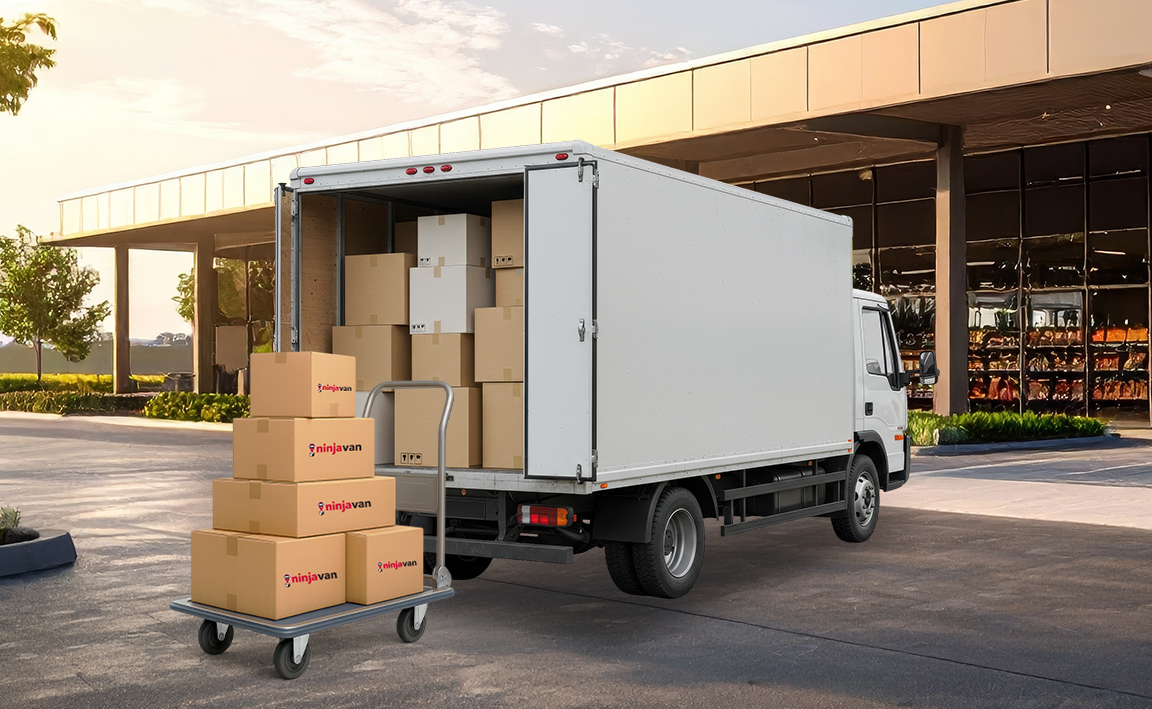
FTL viability is determined by operational cost, not company size. When shared-load constraints generate missed receiving windows, product handling damage, or route variability that causes downstream stockouts, the cost basis for dedicated truck capacity becomes justified at any scale.
LTL rates per unit can run 20% to 40% higher than FTL on the same route when volume thresholds are consistently met. Ninja Restock supports both FTL and LTL arrangements with flexible scheduling and multi-drop capability.
Decision Triggers
Consider FTL regardless of company size when:
- You regularly book multiple LTL shipments on the same route within the same scheduling window
- Transit variability from shared loads is causing downstream stockouts or retail compliance deductions
- Cargo is fragile, high-value, or requires specific handling control throughout transit
- Coordination overhead across LTL drop points is generating measurable scheduling friction and cost
Myth 5: All Logistics Providers Offer the Same Core Service
Evaluating logistics providers primarily on per-shipment price is one of the most operationally costly procurement decisions available. Structural capability differences are invisible in price comparisons and surface only after onboarding.
Fact
Last-mile coverage, fulfillment infrastructure, B2B distribution models, technology integration, and exception handling differ significantly between providers. A provider built for consumer parcel volume operates a fundamentally different model from one that also manages warehousing, B2B restocking, or multi-location distribution. These capability gaps are a leading operational risk for businesses that select on cost alone.
H3: Evaluation Checklist
Before selecting a logistics provider, operations and procurement teams should ask:
- What does the fulfillment offering include: storage, picking, packing, returns handling, or only a subset?
- Does the provider's technology connect with your ecommerce platform, OMS, or ERP?
- What is the geographic coverage, and are there route or volume limitations for your network?
- How are exceptions and failed deliveries managed, and what is the resolution timeline?
- Does the provider support both B2B and B2C delivery simultaneously?
Myth 6: Last-Mile Delivery Is Where Most Logistics Costs Hide
Last-mile delivery is measurable and separately invoiced, making it the default focus for cost reduction. In underperforming operations, this focus is usually misplaced.
Fact
Last-mile delivery accounts for up to 53% of total shipping cost, which explains why it draws attention. But cost drivers in underperforming operations typically originate upstream. Inaccurate inventory leads to cancellations and emergency restocking. Pick and pack errors generate returns and reprocessing costs. Poor route planning creates unnecessary trips. Unreliable B2B restocking causes downstream stockouts. Upstream failures also directly inflate last-mile failure rates: a mislabeled or poorly packed parcel creates a failed delivery before it reaches the courier.
Upstream Cost Audit
Before targeting last-mile spend, operations teams should audit:
- Inventory cancellation rate resulting from stock discrepancies across channels
- Pick and pack error rate and resulting returns or reprocessing volume
- Transport consolidation efficiency on regular B2B restocking routes
- B2B restocking reliability and its impact on retail partner fill rates
What These Six Myths Have in Common
The six myths in this article share a common thread. They direct attention and budget toward the wrong variables. Businesses that treat delivery speed as the primary customer experience metric, assume warehouse ownership equals inventory control, or evaluate logistics providers on per-shipment price alone are not making bad decisions in isolation. They are making decisions shaped by assumptions that were never examined against how modern logistics actually operates.
Correcting these assumptions does not require a full supply chain overhaul. It starts with clearer questions at the point of provider selection, more precise performance indicators at the operations level, and a better understanding of where cost and service risk actually originates in your logistics chain. For most Philippine businesses, the highest-leverage changes are upstream: inventory accuracy, fulfillment process reliability, and restocking consistency before the parcel ever reaches the last mile.
#NinjaTip: Ninja Van offers three logistics solutions for Philippine businesses: Ninja Fulfillment for warehousing, inventory management, and order processing; Ninja Restock for B2B restocking via FTL and LTL; and Ninja Dash for last-mile delivery at scale. See all solutions at ninjavan.co/en-ph/logistics-solutions.
FAQs about Common Logistics Myths
Should Philippine businesses prioritize same-day delivery as a standard logistics metric?
No. Same-day delivery is not a universal standard, and setting it as a default expectation creates operational misalignment. First-attempt delivery success within a clearly communicated window is a stronger predictor of customer retention than delivery speed alone. Operations teams should assess whether same-day delivery is a genuine retention driver in their category before making it a baseline service commitment.
How should companies evaluate logistics visibility before signing a provider contract?
Ask what tracking tools are available and require them in writing before signing. Confirm whether real-time shipment tracking is accessible to your team, how exceptions are flagged and escalated, and whether system-to-system integration is supported. A provider unable to specify these terms during negotiations presents a practical visibility gap, regardless of what the contract says.
Is fulfillment viable for mid-market businesses, or only at enterprise scale?
3PL fulfillment is viable for mid-market businesses and is often more operationally sound than in-house setups at that scale. Providers with barcode-verified picking, WMS dashboards, and OMS integration give mid-market clients fulfillment accuracy and inventory visibility that would require significant internal investment to replicate. The relevant question is not company size but whether order volume and SKU complexity justify the service arrangement.
How should logistics providers be evaluated beyond per-shipment price?
Evaluate geographic coverage, fulfillment infrastructure (storage, picking, packing, returns), technology integration with your existing platforms, B2B and B2C delivery capability, and exception handling processes. Capability gaps in any of these areas generate operational costs that consistently exceed the savings from a lower per-shipment rate.
What logistics costs do operations teams most commonly overlook?
Upstream costs are the most consistently underestimated. These include inventory cancellations from stock discrepancies, pick and pack errors that generate returns and reprocessing, coordination overhead from fragmented LTL routing, and B2B restocking failures that cause stockouts at retail locations. These costs do not appear on last-mile delivery invoices but directly inflate total logistics spend.