
Managing Bulk Inventory Restocking Across Multiple Store Locations

.webp)
Key Takeaways
- Multi-location replenishment is a coordination problem: managing bulk delivery timing, demand variation, and receiving windows across branches simultaneously requires a different approach than restocking a single store.
- Treating all branches with a uniform bulk order quantity leads to systematic overstocking at slower locations and stockouts at higher-velocity ones.
- Consolidating inventory into a single bulk pickup (split across multiple drop-off points) reduces logistics cost and coordination overhead compared to managing separate shipments per branch.
- FTL bulk delivery suits high-volume, consistent routes; LTL bulk shipping works better for smaller or more frequent restocking runs; confirm availability for your specific routes directly with Ninja Van.
- Ninja Restock provides FTL and LTL transport, cross-docking, and multi-drop delivery for Philippine businesses; confirm service area coverage, product eligibility, and delivery terms directly with Ninja Van before onboarding.
Restocking one store is a planning problem. Restocking five, ten, or twenty branches is something else entirely. It is a coordination challenge where every additional location multiplies the variables your team has to manage simultaneously.
As more Philippine businesses expand across multiple store formats such as retail chains, pharmacy networks, multi-branch F&B operators, modern trade brands, the gaps in their current replenishment setup tend to surface predictably.
With the Philippines freight and logistics sector valued at USD 15.26 billion in 2025 (Mordor Intelligence, 2025), the infrastructure to support multi-location bulk restocking exists. But getting the most out of it means building a replenishment system designed for network-level coordination, not just store-by-store planning.
This article covers why multi-location replenishment is a different problem, where the most common failure points appear, and how to structure a bulk restocking system, including how to match your delivery model (FTL versus LTL) to each route's actual needs, across a growing store network.
Why Multi-Location Replenishment Is a Different Problem
Replenishing one location is primarily a planning problem: managing timing, reorder points, and supplier lead times. Replenishing a network is a coordination problem. Every additional branch adds its own demand pattern, receiving schedule, and storage constraint, and your team has to manage all of them simultaneously, not sequentially.
Store-by-Store Demand Variation

A commercial-district branch may turn over fast-moving SKUs significantly faster than a residential branch stocking the same products. Treating both as identical for replenishment (using one uniform bulk order quantity across the network) leads to a predictable outcome: systematic overstocking at slower locations and stockouts at the ones with higher velocity.
The problem compounds when promotional activity is involved. A campaign at one location does not automatically translate to demand changes across the rest of the network. Without branch-level visibility, restocking decisions default to a network average that is almost always wrong for at least some branches.
Delivery Windows and Receiving Capacity by Location
Some branches can only receive stock during specific hours or days, depending on store format, staffing, and the size of their receiving area. Smaller-format stores often need more frequent, smaller bulk drops rather than a single large delivery that exceeds what their back room can absorb in one go.
Coordinating bulk delivery runs across branches with mismatched receiving windows (without a centralized logistics structure) is one of the leading causes of missed deliveries and emergency restocking at the network level. A bulk shipment that arrives outside a store's receiving window does not just create a one-time inconvenience; it sets off a chain of stock adjustments and re-delivery costs that accumulate.
The Most Common Replenishment Challenges for Multi-Branch Businesses
Businesses that have outgrown manual inventory tracking tend to encounter a predictable set of recurring problems, regardless of industry. Identifying these patterns early is the first step toward building a system that addresses them rather than managing the symptoms.
Inventory Visibility Gaps Between Locations
Without centralized stock tracking, one branch may be overstocked on a SKU while another runs out, with no mechanism to redistribute before it becomes a problem. The branch that is out of stock does not know the overstocked branch is sitting on a surplus, and your operations team may not either until a sales report surfaces the gap days later.
Visibility gaps force teams into a reactive mode: responding to stockouts after they happen rather than preventing them through informed restocking decisions.
Consolidation and Coordination Overhead
Managing separate shipments, suppliers, or carrier relationships per branch multiplies coordination overhead in ways that do not scale. As branch count grows, the administrative cost of managing these independently often exceeds the operational savings from handling each location separately.
The solution is typically a logistics partner capable of consolidating a single bulk pickup (whether a full-truckload shipment for high-volume routes or a shared, less-than-truckload run) and splitting delivery across multiple drop-off points. That shift alone removes a significant layer of per-branch coordination work.
Replenishment Timing Mismatches
Restocking schedules not calibrated to each store's sales velocity create boom-bust inventory cycles: overstocked after a bulk delivery, running low before the next one arrives. Reducing restocking frequency to cut logistics costs often creates avoidable stockouts at high-velocity locations. The alternative (more frequent small bulk restocks) is operationally easier for stores but harder to coordinate at the network level without the right delivery model in place.
The Hidden Costs of Getting Multi-Store Replenishment Wrong
The financial damage from disorganized multi-location bulk restocking rarely shows up in a single budget line. It accumulates across lost sales, emergency logistics premiums, and capital tied up in overstock at locations that did not need it.
Shelf Gaps and Lost Sales
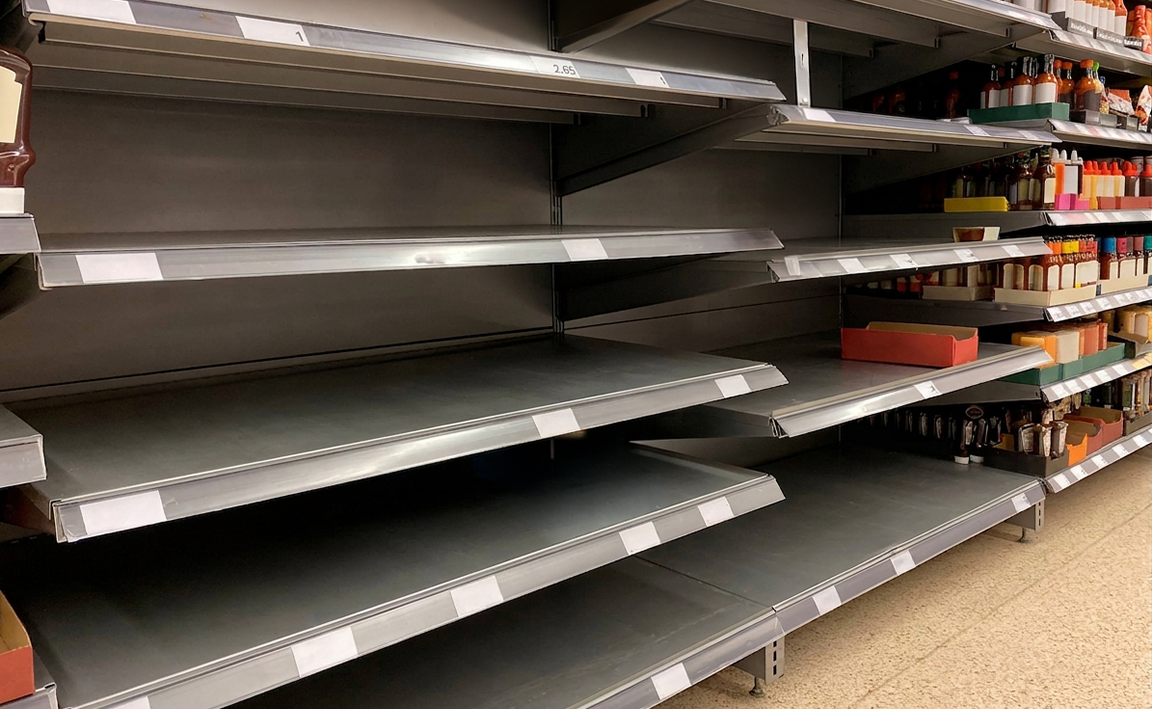
An out-of-stock item does not just lose one sale. Over time, it trains customers to look elsewhere, reducing foot traffic even after stock is restored. Shelf gaps during peak periods (sale events, seasonal spikes) carry higher revenue impact than the same gaps during off-peak weeks, because the customers you miss during a high-traffic period are the ones most likely to have returned.
Emergency Restocking Premiums
When standard bulk replenishment fails, the response is typically an express delivery or emergency supplier order at premium cost. These costs are rarely tracked separately, but they can significantly inflate total logistics spend, particularly if emergency bulk restocking becomes a regular occurrence rather than the exception.
Overstock at Slower Locations
Uniform bulk replenishment orders sent across the network regardless of each branch's sales velocity leave slower locations overstocked. Excess inventory ties up working capital, increases storage pressure at the branch level, and raises the risk of expiry or obsolescence for perishable or time-sensitive SKUs.
Strategies to Streamline Bulk Restocking Across Multiple Locations
Building a more reliable multi-location bulk restocking system does not require a full-scale overhaul. The following strategies address the core coordination problems without assuming enterprise-level infrastructure.
Set Reorder Points by Location, Not by Network Average
Each branch should have its own reorder point based on that location's historical sales velocity and supplier lead time, not a number averaged across the network. A network-wide reorder point is almost always too high for slower branches and too low for faster ones, which means it is systematically wrong at both ends.
Review branch-level reorder points at least quarterly to reflect shifting demand patterns. A branch that was slow six months ago may have become a higher-velocity location since a new development opened nearby, or vice versa.
Move to Scheduled, Recurring Bulk Delivery Runs
Ad-hoc restocking is the most expensive and least predictable approach. Each unscheduled bulk delivery adds coordination cost and leaves little room for planning at the store level. Recurring bulk delivery schedules allow better route planning, better receiving preparation at the branch, and more predictable inventory positioning across the network.
Build delivery schedules around each store's actual receiving windows, not just what is convenient for the carrier or supplier. A schedule that works logistically but arrives when a branch cannot receive stock creates the same problem as no schedule at all.
Use Consolidated Multi-Drop Deliveries
Consolidating inventory into a single bulk pickup (one collection point, one logistics partner) and splitting delivery across multiple branches reduces total logistics cost and simplifies coordination compared to managing separate shipments per location.
Cross-docking arrangements support this by allowing stock to move from a supplier or central point to multiple store destinations with minimal time in central storage. That reduces handling time and makes more frequent bulk restocking runs economically viable, even for smaller branches.
Match Delivery Volume to the Right Bulk Shipping Model
Not all bulk restocking runs have the same volume profile. A single high-volume route serving a large retail hub calls for a different delivery model than a multi-branch run serving several smaller stores.
- Full-truckload (FTL) bulk delivery provides dedicated vehicle capacity for high-volume, consistent routes, with direct routing optimized for large retail networks. It reduces per-unit delivery cost at scale and minimizes intermediate stops, making it the right fit when branch volume justifies a dedicated truck on a regular schedule.
- Less-than-truckload (LTL) bulk shipping allows your business to move smaller quantities across multiple branches on a shared run, suited for more frequent restocking without committing to full-truck volume on every route. LTL is particularly useful for maintaining inventory agility at branches with variable or unpredictable demand.
The right mix of FTL and LTL bulk delivery depends on each route's volume, frequency, and distance, and may differ branch by branch within the same network. Reviewing your route map against actual delivery volume is the most direct way to identify which model applies where.
Invest in Real-Time Shipment Visibility
Knowing where a bulk delivery is (and whether it will arrive within a branch's receiving window) allows your operations team to act before a missed delivery becomes a stockout. Dashboard-based tracking at the network level turns what is often a reactive, phone-based follow-up process into something your team can monitor and manage proactively, across all branches at once.
#NinjaTip: When reviewing branch-level reorder points, look at your three highest-volume stockout months from the past year. If the same branches appear consistently, the issue is almost always a reorder point set too low for that location's sales velocity, not a supplier reliability problem. Start there before adjusting your bulk delivery frequency.
How Ninja Restock Supports Multi-Location Bulk Restocking in the Philippines
Ninja Restock is designed for businesses moving stock in bulk to multiple locations, covering FTL and LTL transport, cross-docking, and multi-drop delivery from a single pickup. It targets businesses ranging from growing brands to large enterprise retail chains, including modern trade drops and bulk distribution to multiple retail outlets.
Confirmed Capabilities for Bulk Multi-Location Restocking
- FTL and LTL bulk delivery options: FTL provides dedicated vehicle capacity for high-volume, consistent routes. LTL handles more frequent, smaller bulk deliveries for branch networks where full-truck volume is not needed on every route. Fleet capacity is also dynamic, scaling up or down to match service requirements across 4W Van/AUV, 4W Truck, 6W Truck, and 10W Truck options.
- Multi-drop from a single consolidated bulk pickup: One collection point covers multiple drop-off locations, such as warehouse to stores, store to store, or warehouse to warehouse. This cuts the number of separate logistics runs across the network.
- Cross-docking: Goods move efficiently from inbound transport straight to the end customer, with minimal time spent in storage. This helps businesses reach multiple markets faster while reducing the need for extended storage.
- Flexible restocking schedules: Delivery schedules align with individual branches receiving windows and sales velocity, not fixed carrier timetables.
- Ninja Dashboard: Real-time shipment visibility across the delivery network, with status tracking per drop-off location.
Ninja Van covers next-day delivery within Metro Manila and the Greater Metro Area, and 1 to 2 days for provincial locations including Central and North Luzon and many Visayas-Mindanao locations. Accepted product categories include garments, cosmetics, accessories, gadgets, non-perishable foods, restaurant supplies, marketing collateral, and non-toxic raw materials. Bring your branch list and full SKU details to the onboarding discussion to get both mapped quickly.
Talk to the Ninja Van team to see if Ninja Restock fits your branch network and bulk delivery requirements, or get in touch to discuss onboarding when you are ready to commit.
FAQs on Bulk Restocking and Multi-Location Inventory Replenishment
What makes inventory replenishment harder for multi-location businesses?
Each additional location introduces its own demand pattern, storage capacity, and delivery window. Coordinating these simultaneously (without centralized systems or a consolidated bulk delivery model) creates inventory imbalances at the branch level and escalating coordination costs at the network level. The problem is not just volume; it is the number of variables your team has to manage at the same time.
How should reorder points be set for multiple store locations?
Reorder points should be set individually per branch, based on that location's historical sales velocity and lead time, not averaged across the network. A network-wide reorder point is almost always too high for slower branches and too low for faster ones. Review and adjust branch-level reorder points at least quarterly to reflect shifting demand patterns.
What is consolidated multi-drop delivery and how does it help multi-branch businesses?
Consolidated multi-drop delivery means a single bulk pickup is split across multiple store locations by one logistics partner, rather than managing separate shipments per branch. This reduces total bulk delivery cost, simplifies coordination, and makes it easier to align delivery timing with each store's receiving window. It also removes the administrative overhead of managing separate carrier relationships for each location.
When should a multi-location business use FTL versus LTL for bulk restocking?
FTL bulk delivery works best for high-volume, consistent routes where a dedicated truck is cost-effective, typically large retail hubs or anchor branches with predictable weekly volume. LTL bulk shipping is better suited to smaller or more frequent restocking runs across multiple branches where full-truck volume is not available on every route. The right mix varies by network and route; confirm FTL and LTL availability for your specific bulk restocking routes directly with Ninja Van before committing to a delivery model.