
Geo-Tagging, ePOD, and API Integration: What Modern Last-Mile Delivery Technology Does for Your Business

.webp)
Online sellers in the Philippines face two recurring delivery problems as they scale: parcels marked "delivered" that recipients claim they never received, and operations teams manually encoding orders across multiple platforms every day.
Both issues are expensive. One creates disputes and customer trust problems. The other creates avoidable processing errors and fulfillment bottlenecks.
OECD estimates logistics costs at around 27% of wholesale prices in the Philippines, highlighting how delivery inefficiencies and avoidable errors directly impact margins and operational performance.
Modern last-mile delivery addresses both through three connected technology layers:
- Geo-tagging: location-verified delivery events
- ePOD (Electronic Proof of Delivery): digital, auditable delivery records
- API integration: automated order-to-delivery data flow
Together, these move delivery operations from manual and reactive to verified and manageable.
Geo-Tagging in Last-Mile Delivery: Why Location Data Matters
Geo-tagging in delivery operations means GPS-based location data is captured at the exact moment of delivery and attached to the delivery record.
This matters in the Philippines because address quality is inconsistent across locations. Outside major business districts, many addresses still rely on landmarks, informal descriptions, or incomplete street-level details. A written address match alone does not always confirm the parcel reached the intended physical location.
The OECD also notes that the Philippines spans around 7,600 islands, increasing last-mile and inter-island delivery complexity. This makes location-verified delivery records more critical, especially when deliveries extend beyond major urban areas.
How geo-tagged delivery records work
At the point of delivery:
- The rider's device captures GPS coordinates
- The system timestamps the event
- Location data is stored as part of the permanent delivery record
This creates a location-anchored record independent of text address quality.
What geo-tagging enables for businesses
- Verification that delivery happened at a specific physical point, not just that a photo was uploaded
- Faster, evidence-based investigation when recipients report non-delivery
- Better operational review through location-linked delivery outcomes, including repeated failures in specific zones or routes
In Ninja Dash, geo-tagged location data is incorporated into ePOD records alongside photo confirmation, giving operations teams a more complete delivery proof at scale.
How ePOD Improves Delivery Verification

ePOD adds a structured verification layer to delivery operations by combining multiple data points into a single, auditable record.
PPOD vs. ePOD: Understanding the Difference
PPOD (Picture Proof of Delivery) is a commonly required photo-based delivery verification practice in regulated delivery contexts such as banking, finance, and government, a photo taken at handover that confirms a delivery event occurred.
Ninja Dash adds ePOD as an additional verification layer by attaching geo-tagged location data and a timestamp to the delivery record, making it more complete and auditable beyond photo confirmation alone.
A complete ePOD record in Ninja Dash includes:
- Delivery photo: the standard photo handover record
- Geo-tagged delivery coordinates: GPS location of the delivery point
- Timestamp: exact date and time of completion
- Delivery status: completed, failed attempt, or return flow
These records are visible in the Ninja Dashboard as live digital entries, not paper-based artifacts that require manual retrieval.
How ePOD changes dispute resolution
Without a complete digital delivery record, disputes are slow and ambiguous: the system says "delivered," while the recipient says "not received."
With ePOD, dispute handling starts with evidence:
- Review delivery photo
- Check geo-tagged location
- Confirm timestamp and status trail
That gives teams a factual starting point for resolution instead of relying on assumptions or back-and-forth claims.
This is especially important for sensitive deliveries such as cards and documents for banking, finance, and government use cases. In these scenarios, verification and traceability requirements are higher than in standard parcel drops. ePOD records, combined with Ninja Dash's Return Document Assurance, the secure consolidation and return of critical undelivered materials support these requirements with documented, traceable handling records for every delivery. For organizations with dedicated secure-mailer needs, Card & Document Delivery provides an additional service option.
ePOD data also feeds into performance management. Operations teams can track delivery success patterns, flag recurring exception zones, and monitor collection efficiency and route-level performance in near real time.
API Integration for E-Commerce Delivery
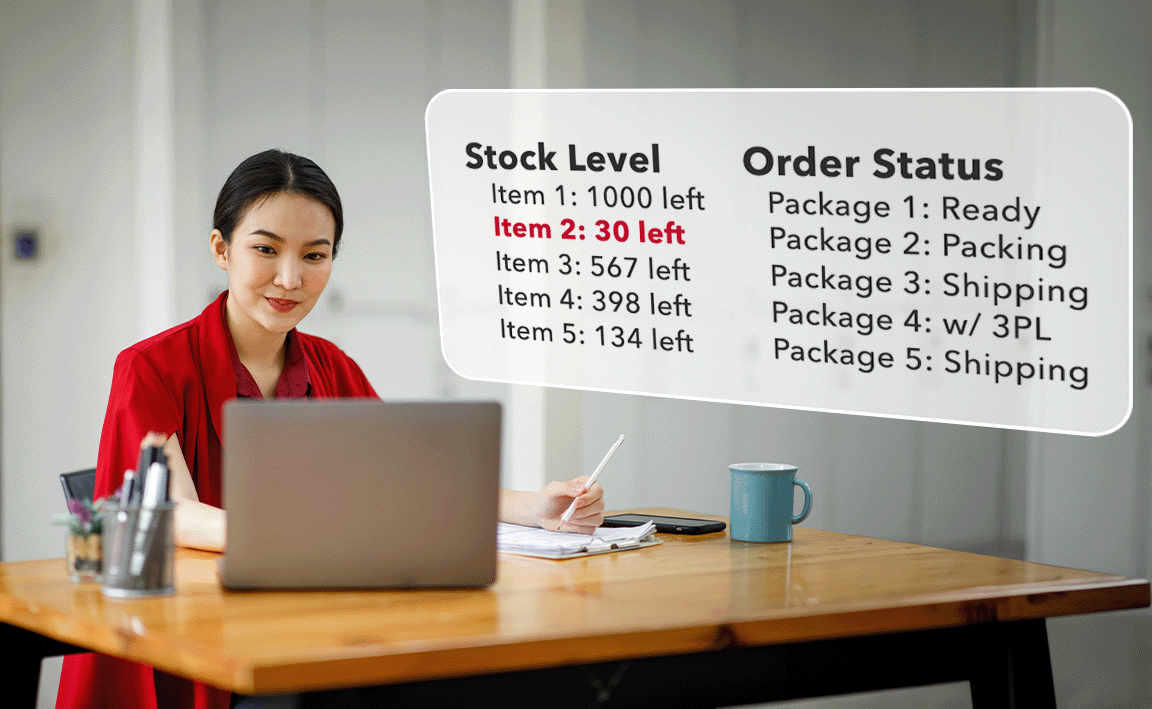
API integration in last-mile delivery means your order source, e-commerce platform or OMS is directly connected to the courier system, so key actions happen automatically.
At low volume, manual courier entry may still be manageable. As daily volume grows, manual input becomes a compounding cost and error risk: wrong address fields, duplicate entries, and delayed waybill generation all affect delivery reliability.
Zebra’s Warehousing Vision Study reports that 73% of decision-makers are accelerating modernization timelines, with 69% already implementing or planning workflow automation. This reflects a broader shift toward reducing manual processes in logistics operations.
What API integration enables in Ninja Dash
- Automated order creation: confirmed orders flow directly into Ninja Dash without re-encoding
- Automated waybill generation: labels generated from system data, reducing manual prep
- Real-time status sync: tracking updates flow back to your systems without manual checking
- Centralized reporting: delivery and performance data reviewed in one operational view
- Mass bulk booking: high-volume bookings processed in seconds instead of manual line-by-line entry
Ninja Dashboard supports API and plugin workflows for platforms including Shopify, WooCommerce, Pancake, Anchanto, and more, helping teams automate high-volume order processing through Ninja Dash.
How These Three Technologies Work Together
Geo-tagging, ePOD, and API integration are most valuable when used as one connected delivery infrastructure layer.
A typical flow looks like this:
- Order confirmed on seller platform: API triggers order creation and waybill generation in Ninja Dash
- Shipment in transit: tracking statuses update in the system without manual polling
- Delivery event completed: PPOD photo captured, ePOD record generated, geo-tag and timestamp logged
- Record becomes available: delivery proof (photo, location, time, status) visible in Ninja Dashboard
- If a dispute is raised: operations team retrieves one complete record and reviews evidence immediately
This is the shift from courier usage to delivery infrastructure management. At low volume, these capabilities reduce friction. At higher volume, they prevent operational breakdown.
Without this stack, processes that work at 20 orders a day become bottlenecks at 200+. With it, delivery operations remain trackable, verifiable, and scalable.
For businesses scaling beyond last-mile execution alone, this model can also align with upstream operations such as Ninja Fulfillment and Ninja Restock to support wider end-to-end logistics control.
Modern Last-Mile Delivery Is Infrastructure, Not Just a Courier Service
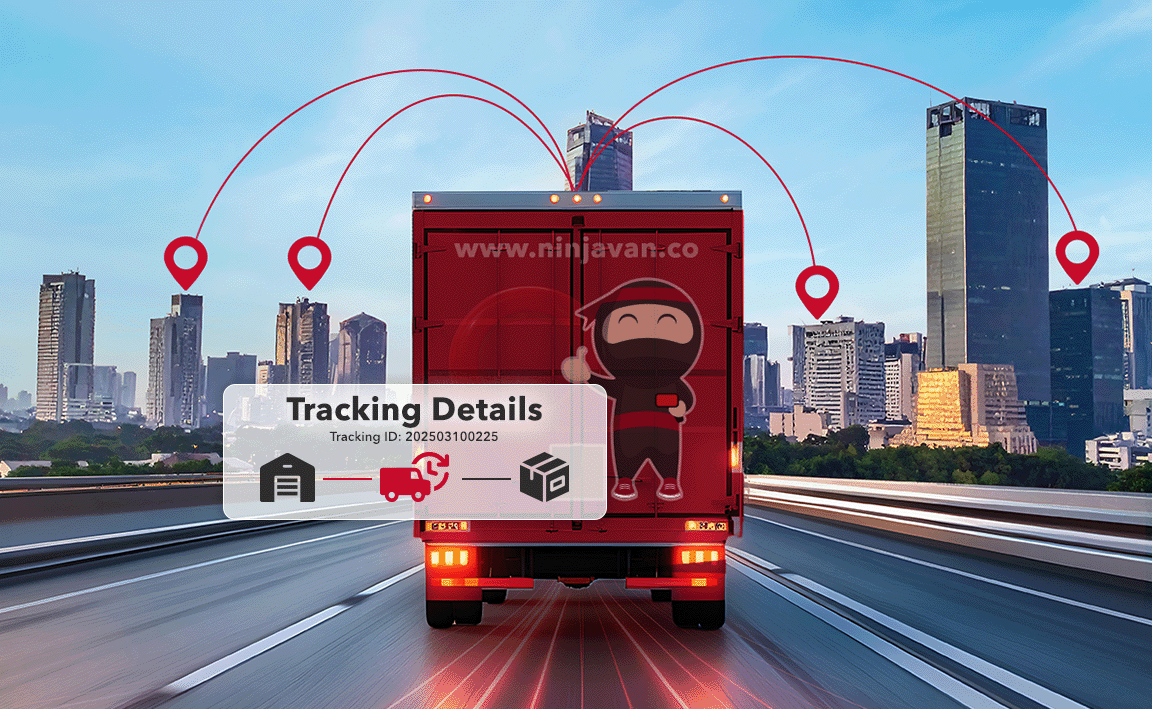
Geo-tagging, ePOD, and API integration are not optional enhancements. They are the operational infrastructure behind last-mile delivery that businesses can track, verify, and act on.
For online sellers and enterprise shippers, the practical outcomes are direct:
- Cleaner delivery verification: every completed delivery has a photo, location, and timestamp on record
- Faster dispute resolution: evidence-first investigation instead of competing claims
- Lower manual processing overhead: order creation, waybill generation, and tracking automated end to end
- Better visibility into delivery performance: real-time analytics on delivery success rates, exception zones, and route-level patterns
Built on verified delivery compliance (PPOD + ePOD geo-tagged confirmations), real-time tracking, and API integration with major e-commerce platforms, Ninja Dash provides the last-mile infrastructure for businesses that need delivery performance they can track, prove, and improve over time.
Ready to operationalize verified last-mile delivery? Talk to Ninja Van Philippines to set up Ninja Dash for your business.