
How Ninja Van's Logistics Solutions Work Together to Support Your Business

.webp)
Key Takeaways
- Ninja Van's last-mile delivery, Ninja Fulfillment, and Ninja Restock are designed to connect, not operate as three unrelated products.
- Businesses typically move from one service to two or three as order volume, platform complexity, or retail distribution grows, not automatically at a fixed size.
- Fulfillment can serve as a starting foundation for businesses not yet ready for standalone delivery volume, not only as a later add-on.
- Enterprise clients are generally offered all three services from the start, coordinated through the Ninja Dashboard.
- Specific service terms, storage options, route coverage, and volume thresholds vary by setup and should always be confirmed directly with Ninja Van.
Most businesses start their logistics search with one problem in mind. A retailer needs parcels out the door faster. A brand needs somewhere to store growing inventory. A distributor needs stock on shelves before customers walk away empty-handed. Each of these looks like a separate decision, and for a while, it usually is.
Those needs rarely stay separate once a business grows. The company that started with delivery starts asking about warehousing. The one that solved warehousing starts asking about restocking a retail network. According to Mordor Intelligence, domestic parcels already account for close to 65 percent of the Philippines' courier, express, and parcel (CEP) segment in 2025, and that segment keeps expanding as more operations move online. Growth on that scale rarely stays confined to a single function.
This article looks at how Ninja Van's logistics services in the Philippines work together instead of competing as separate line items in a budget. It walks through the scenarios where adding a second or third service tends to make an operational difference, not just a sales pitch.
What Is an End-to-End Logistics Solution?
An end-to-end logistics solution covers the full movement of goods, from the moment stock arrives in storage to the moment it lands on a customer's doorstep or a retailer's shelf. That includes storage, order processing, last-mile delivery, and B2B restocking, handled as connected functions, not isolated transactions.
Each function can be handled through a different provider, and that setup works, until it doesn't.
Why It Matters for Growing Businesses
Multiple logistics providers bring multiple things: different account portals, different support lines, and a different process every time something goes wrong. None of that shows up on an invoice, but it shows up in the hours a small operations team spends chasing updates instead of running the business.
An integrated provider can share inventory data across fulfillment and delivery instead of keeping it siloed. If your warehouse and your courier are the same system, a stock discrepancy gets caught before it becomes a failed delivery, not after.
The Philippine freight and logistics market is projected to grow from roughly USD 15.26 billion in 2025 to USD 21.60 billion by 2031, as tracked by Mordor Intelligence. Growth at that pace tends to strain a setup built on several separate vendors, even before any single failure forces the point.
What End-to-End Looks Like in Practice
A consumer goods brand's version of end-to-end usually means inventory sitting in a fulfillment warehouse, orders picked, packed, and dispatched from that same facility, then delivered to the customer with tracking visible the entire way. One handoff, one system, one place to check when a customer asks where their order is.
A B2B business follows the same principle in a different shape. Stock moves out of a central warehouse into multiple retail or distributor locations, and the business can see where every shipment sits at every stage instead of waiting for a phone call from the receiving end.
Ninja Van's Core Logistics Services
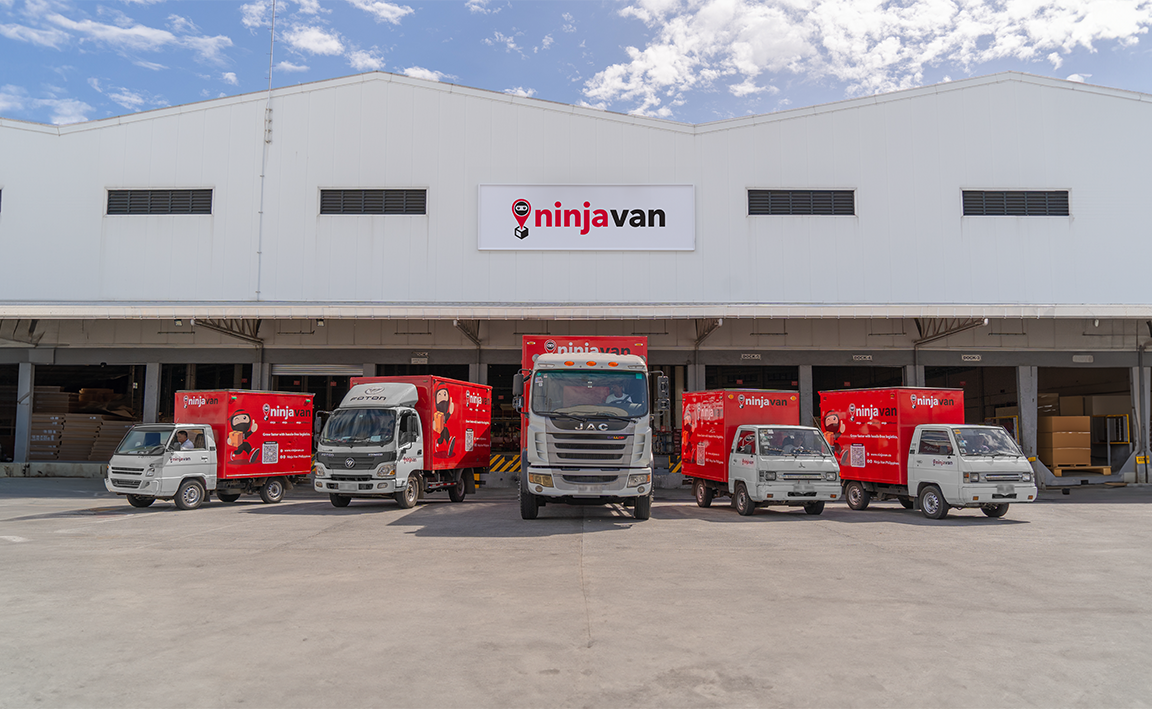
Ninja Van offers three core logistics services in the Philippines. Each one addresses a different operational need, and each connects to the others instead of standing alone as its own product.
Last-Mile Delivery
Last-mile delivery gets parcels from the network directly to end customers, whether that's a consumer, a small business, or an individual recipient. It suits e-commerce brands, direct-to-consumer operations, and any business shipping individual orders instead of bulk stock.
The service includes parcel tracking, proof of delivery, and dashboard-based shipment management, so businesses can check an order's status directly instead of calling in for an update.
Ninja Fulfillment
Ninja Fulfillment covers warehousing, order processing, and dispatch for businesses that would rather outsource that side of the operation than run it themselves. That includes inventory storage, picking and packing, and barcode-driven quality checkpoints before an order gets handed to the delivery network.
It tends to make the most sense for businesses with consistent order volume looking to cut the overhead of running their own warehouse and fulfillment team in-house. Exact storage options, platform integrations, and handling requirements should be confirmed directly with Ninja Van before onboarding.
Ninja Restock
Ninja Restock moves stock in bulk between warehouses, distribution centers, and retail or trade partners. It supports full truckload (FTL), less-than-truckload (LTL), and cross-docking arrangements, with shipment visibility available through the Ninja Dashboard.
This is the service built for FMCG businesses, distributors, and enterprise brands managing high-volume B2B stock movement instead of individual parcel orders. Route coverage, vehicle availability, and service terms differ by region and arrangement, so these should be confirmed with Ninja Van before planning any restocking operation.
How the Services Work Together, Common Scenarios
Most businesses come to Ninja Van with one need in mind. Which combination actually fits depends on where that business is in its growth, how much volume it's moving, and how complex its operations have become. The scenarios below are illustrative patterns, not specific client case studies, but they reflect how these services are designed to connect.
Scenario 1: From Last-Mile Delivery to Fulfillment
Picture a business that starts by shipping individual customer orders through last-mile delivery. That works fine at low volume. As orders grow, though, packing everything in-house and handing off dozens or hundreds of parcels a day starts eating into time the team could spend elsewhere.
At that point, Ninja Fulfillment can step in: storage, picking, and packing handled at a dedicated fulfillment center, with completed orders handed straight to the delivery network instead of routing back through the business first. This kind of transition can lower the per-order handling cost and free the business to focus on sales and product instead of warehouse logistics.
Scenario 2: Fulfillment to Support Scale
Now picture a different business, one that inquires about last-mile delivery but isn't shipping enough volume yet to make standalone delivery pricing work efficiently. This isn't a dead end. It's often where Ninja Fulfillment comes in as a foundation, covering inventory management and multi-platform order syncing, and giving a business that isn't sure how to structure its own warehouse operations somewhere to start.
Fulfillment, in this scenario, isn't the end goal. It's the operational base that lets a business build toward the volume where delivery services make full sense.
Scenario 3: Enterprise Logistics from the Start
Larger businesses and enterprise clients typically see all three core services presented together from the first conversation: last-mile delivery, Ninja Fulfillment, and Ninja Restock.
This positions the company as a full logistics partner, not a single-function vendor. It handles consumer delivery, order fulfillment, and B2B stock movement inside one relationship, with visibility into all of it through the Ninja Dashboard.
When to Consider Adding a Second Logistics Service
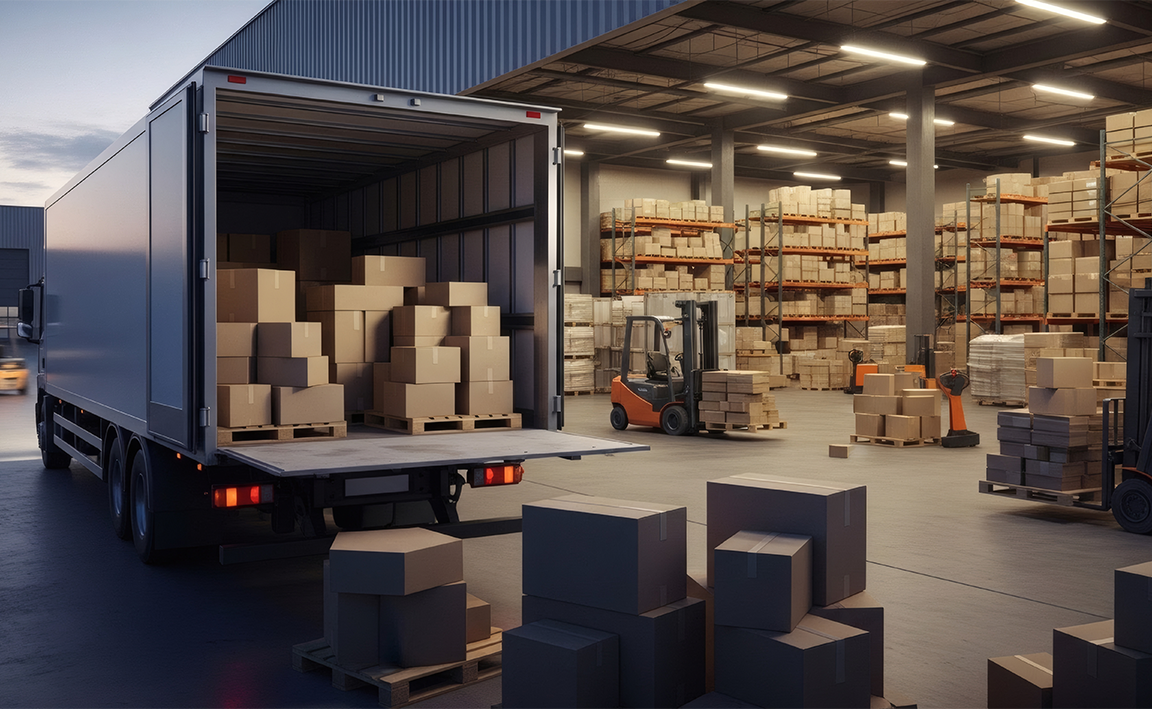
Adding a second service makes sense when the current setup has a specific gap, not simply because the business got bigger. Growth alone isn't the trigger. A specific operational strain usually is.
Signs You May Need Fulfillment Support
- The team spends a significant chunk of the day packing and preparing orders instead of running the parts of the business that actually grow revenue.
- Inventory errors and order discrepancies creep up as volume increases, a pattern that usually points to outgrowing an informal fulfillment setup.
- Selling across multiple platforms has made it harder to keep stock levels accurate everywhere at once.
- Professional storage is clearly needed, but connecting warehouse operations to the delivery side isn't obvious on its own.
#NinjaTip: If a couple of these signs sound familiar, it's worth mapping out where orders actually get stuck today, packing, platform syncing, or storage, before adding a new service. That gap usually points to which one to add first.
Signs You May Need B2B Restock Support
Anyone responsible for keeping shelves stocked at retail partners, distributors, or multiple trade locations tends to notice a handful of signals before the need for a dedicated B2B transport solution becomes obvious.
Bulk stock movement through informal or ad hoc arrangements works at small scale, but the risk compounds as volume rises. Visibility matters here too. A shipment's arrival confirms less than knowing where it sat for the six hours before that. And a restocking setup that can't flex to meet a retailer's growing demand tends to become the real bottleneck, not the demand itself.
How Ninja Van Supports Enterprise Logistics Needs
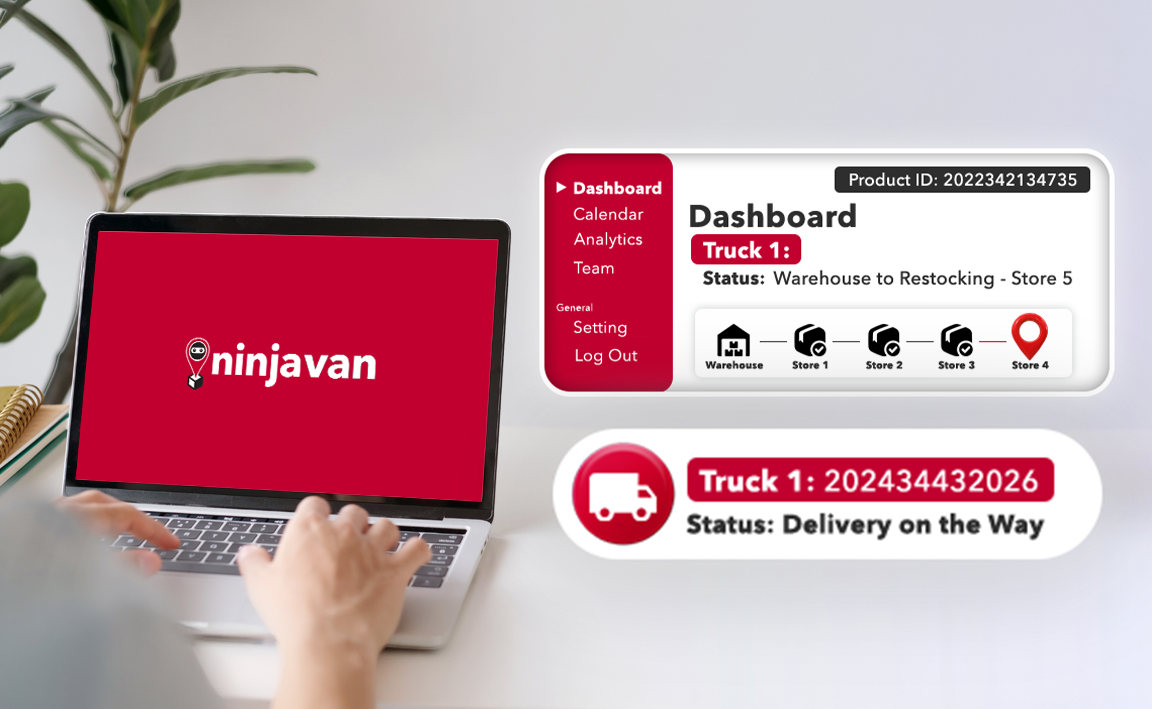
Enterprise businesses tend to carry a more complex mix of requirements: multiple warehousing locations, dedicated B2B transport routes, and high-volume last-mile delivery, all needing to function as one integrated operation instead of three separate ones.
Ninja Van supports enterprise clients through a combination of last-mile delivery, fulfillment, and B2B restock. Operations teams can monitor shipments across all three service types from a single dashboard, which matters more at enterprise scale, since the cost of a blind spot grows with the volume moving through it.
Logistics needs rarely stay simple once a business scales past a single service. Whether the starting point is a delivery bottleneck, a warehousing gap, or a retail network that's outgrown informal restocking, the underlying question is the same: does the current setup still match how the business actually moves goods today.
Enterprise setups like this are rarely a one-size-fits-all conversation, which is why they usually start with a direct one. Talk to the Ninja Van team to map out which combination of last-mile delivery, fulfillment, and restock fits your operation.
FAQs about Ninja Van Logistics Solutions
Does Ninja Van offer more than parcel delivery?
Yes. In addition to last-mile delivery, Ninja Van provides Ninja Fulfillment for warehousing and order processing, and Ninja Restock for B2B stock movement between warehouses, distributors, and retail partners. Businesses can use one service on its own or combine several depending on how their operations are structured.
Can I use Ninja Fulfillment and last-mile delivery together?
Ninja Fulfillment is designed to integrate with Ninja Van's delivery network, with orders handed from the fulfillment center straight into last-mile dispatch. The specific integration process and any onboarding conditions should be confirmed directly with Ninja Van before signing on.
At what stage should I consider adding a fulfillment service?
Fulfillment support tends to make sense once the team spends significant time on warehouse activities instead of core business functions, once inventory errors start increasing, or once selling across multiple platforms makes it harder to keep stock aligned. Exact eligibility and service terms should be confirmed with Ninja Van.
Is there a minimum volume to start using Ninja Van's logistics services?
Minimum volume requirements vary by service and aren't fixed across the board. The specific thresholds for last-mile delivery, Ninja Fulfillment, and Ninja Restock should be confirmed directly with Ninja Van before committing to any one setup.