
Expanding to the Philippines: A Logistics and Distribution Guide for Foreign Brands

.webp)
The Philippine e-commerce market is estimated at USD 17.65 billion in 2025 and projected to reach USD 37.95 billion by 2031. DataReportal reports 95.8 million social media identities in the Philippines, about 81.9% of the population at end-2025, with commerce activity heavily concentrated on Shopee, Lazada, and TikTok Shop.
The opportunity is clear. What matters next is execution.
In the Philippines, logistics is structurally more complex than in geographically compact markets. Distribution planning must account for multi-island routing, channel fragmentation, and import-related variability from day one.
This guide covers the core logistics challenges foreign brands face, what full operational coverage looks like across e-commerce and retail, and how independent setup compares with entering through a 3PL partner.
Why Logistics Is the First Decision, Not the Last
Many foreign brands prioritize marketing and channel launch first, then treat logistics as an implementation detail. In the Philippines, that sequence creates risk.
Key structural realities make logistics a front-end decision:
- Archipelago geography: The Philippines spans over 7,600 islands, making nationwide distribution beyond Metro Manila and Luzon operationally different from land-connected markets.
- Logistics cost pressure: Logistics costs account for around 27% of wholesale prices in the Philippines, according to the OECD. Indonesia, with similar archipelagic geography, sits at 21%. That gap has direct implications for pricing, margin, and service-level commitments.
- Customs and clearance friction: The OECD highlights customs and administrative inefficiencies that can introduce variability into inbound lead times.
- Retail fragmentation: Hypermarkets, supermarkets, convenience, pharmacy, and general trade each require different replenishment formats and delivery compliance.
- E-commerce channel diversity: Marketplace, D2C webstore, and social commerce workflows are not interchangeable.
Foreign brands that delay logistics planning often underestimate how much setup is needed to reach a stable multi-channel baseline.
Key Logistics Challenges for Foreign Brands Entering the Philippines
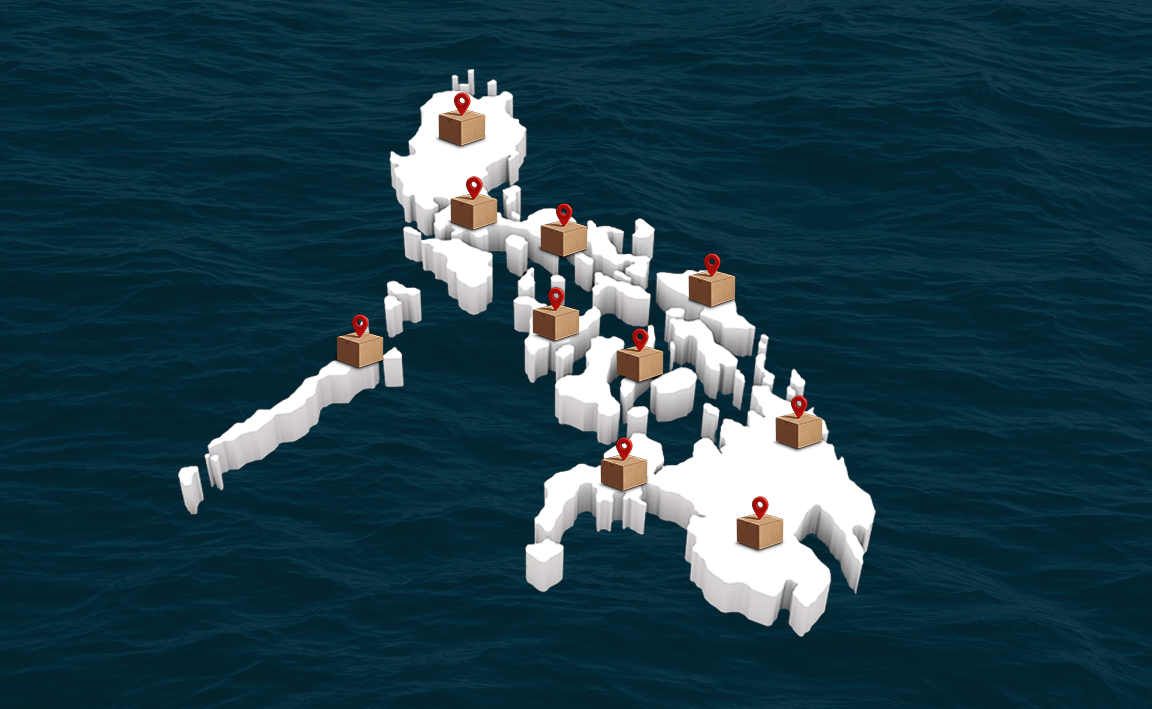
Foreign brands entering the Philippines typically face operational challenges that impact distribution reach, delivery consistency, and multi-channel execution.
Multi-Island Distribution
Metro Manila and nearby Luzon regions are generally better served than more distant areas. Expanding distribution to the Visayas and Mindanao requires inter-island planning, tighter routing control, and stronger carrier coordination.
Coverage depth and service consistency vary by provider and region. For brands with national retail ambitions, regional delivery performance should be evaluated before launch, not after first stockout or replenishment failure.
Multi-Channel Complexity
Most foreign entrants activate multiple channels quickly:
- Marketplace e-commerce
- D2C webstores
- Retail distribution to modern trade and small-format channels
Each channel runs on different execution logic:
- E-commerce B2C: parcel-level pick-pack-ship, SLA adherence, returns cycles
- Modern trade B2B: scheduled bulk replenishment, fixed receiving windows, compliance documents
- Small-format retail: frequent, smaller drop sizes across many store doors
- General trade: layered distributor and sub-distributor movement
Building all four models from outside the Philippines without local infrastructure is usually slow and resource-intensive.
What Full Logistics Coverage Actually Looks Like
To scale reliably, foreign brands need:
- Local warehousing with integrated inventory management
- B2C fulfillment for marketplace and D2C channels
- B2B replenishment to modern trade, small-format retail, and general trade
- Nationwide last-mile delivery with tracking and delivery confirmation
- Returns handling with inventory reconciliation
- Real-time inventory visibility across active channels
For brands that need in-country stockholding and channel-level order handling from one provider, Ninja Fulfillment supports warehousing, B2C fulfillment, and B2B distribution in a single workflow.
Ninja Restock provides B2B retail replenishment supported by Full Truckload (FTL) and Less Than Truckload (LTL) delivery services, ensuring efficient and scalable distribution across, serving hypermarkets, supermarket chains, convenience store networks, pharmacy chains, and general trade outlets nationwide.
Ninja Dash covers nationwide last-mile delivery for both e-commerce and enterprise business with real-time tracking, electronic proof of delivery (ePOD), and dashboard visibility for financial institutions and government.
Together, these create one integrated logistics framework instead of multiple disconnected vendors.
DIY vs. 3PL: Setting Up vs. Partnering

Core decision at entry: build your own logistics stack or partner with a 3PL.
| Factor | DIY Independent Setup | 3PL Partnership |
| Time to operational readiness | Several months to over a year | Weeks to first live orders |
| Upfront capital | High (warehouse, systems, staffing, carrier setup) | Lower (scales with volume) |
| Platform integrations | Built from scratch | Existing integrations available |
| Regional coverage at launch | Limited then expanding | Established network from day one |
| Returns setup | Built internally | Included in existing workflow |
| Volume risk | Fixed-cost exposure at low initial volume | Variable-cost flexibility |
| Operational control | Full internal control | Shared control via partner systems |
DIY is viable for brands with long-term commitment, predictable high volume, and internal capability. For market testing or moderate initial volume, a 3PL-led entry usually reduces risk and speeds time to revenue.
The common approach: a 3PL-led entry to establish in-country operations and confirm market baseline, followed by a reassessment of whether partial or full in-house transition makes sense once volume and distribution footprint are proven.
What to Look For in a Philippine Logistics Partner
Use this checklist during partner evaluation:
- Can they provide warehousing, e-commerce fulfillment, and B2B replenishment under one framework?
- Are systems integrated with Shopee, Lazada, TikTok Shop, Zalora, and branded webstores?
- Can they execute both B2C parcel operations and B2B scheduled bulk distribution?
- Do they support modern trade, convenience, pharmacy, and general trade routes?
- Is regional coverage reliable outside Metro Manila and Luzon?
- Do you get real-time inventory visibility across all active channels?
- How are import and documentation workflows supported?
Specific operational answers matter more than high-level claims.
Your Philippine Market Entry Is Only as Strong as Your Logistics Foundation
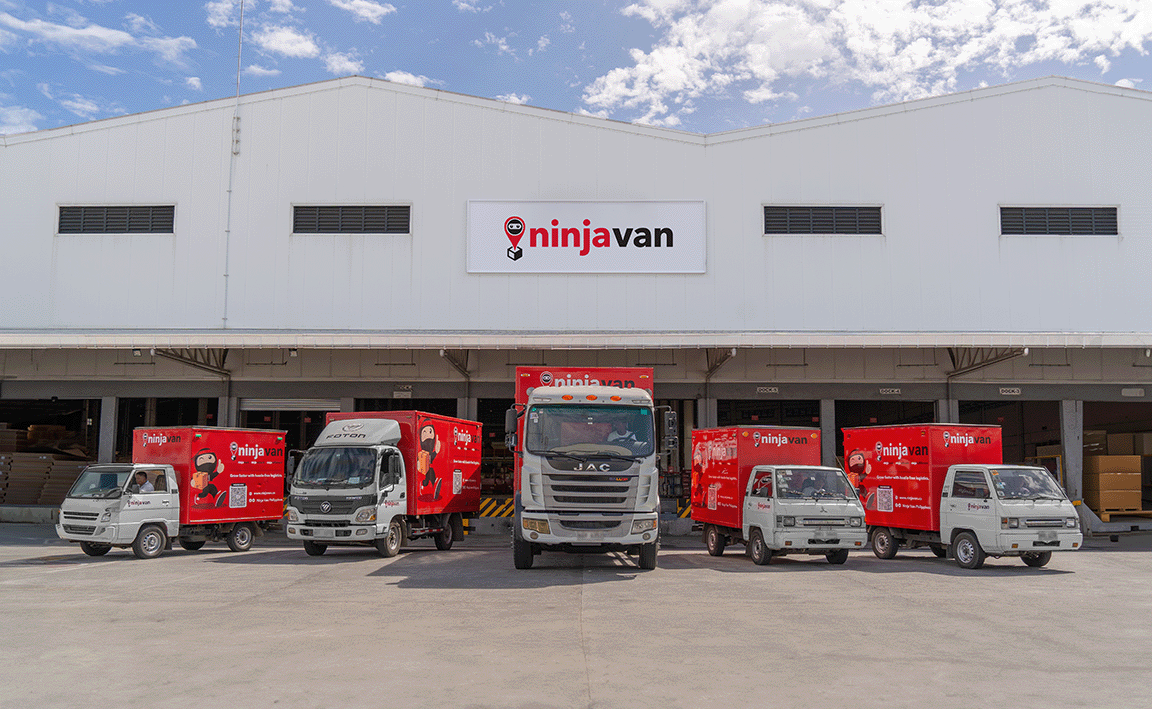
The Philippines is a high-potential market for foreign brands. But demand alone does not create scalable growth. Logistics design determines how quickly a product turns into sell-through across channels.
For most market-entry phases, the practical question is not whether logistics infrastructure is needed, but whether to build it independently or activate through a partner with operating infrastructure already in place.
If you're planning market entry, talk to Ninja Van Philippines to map your warehousing, fulfillment, restock, and last-mile setup before launch.