
What Is Pay-Per-Space Fulfillment? A Flexible Alternative to Traditional Warehousing

.webp)
Key Takeaways
- Pay-per-space fulfillment charges businesses based on actual storage space and order volume used each billing period, rather than a fixed lease commitment.
- Traditional warehousing locks you into a set floor area and ongoing overhead costs regardless of how much of that space your inventory actually fills.
- Businesses with seasonal demand, growing SKU counts, or multiple sales channels tend to benefit most from the flexibility a usage-based model offers.
- Ninja Fulfillment provides integrated warehousing, picking, packing, and dispatch for Philippine businesses; confirm the specific billing structure, pricing, and any minimum requirements directly with the Ninja Van team before onboarding.
- Before committing to any fulfillment partner, verify storage eligibility for your product types, platform integrations, and any special handling requirements in advance.
For many businesses, the real cost of a warehouse is not the rent. It is the space you pay for even when it sits empty. Fixed leases charge you the same amount whether your shelves are packed ahead of an 11.11 sale or half-empty in the weeks after.
With the Philippines e-commerce market valued at USD 18.22 billion in 2025 and projected to reach USD 83.91 billion by 2035 (Expert Market Research, 2026), more businesses are managing higher order volumes, more SKUs, and less predictable demand cycles than before. That shift is pushing a growing number of SMEs and mid-sized enterprises to ask whether committing to a fixed warehouse is still the right call, or whether a model that charges based on actual usage might work better for where their business is right now..
This article covers what pay-per-space fulfillment is, how it compares to traditional warehousing on cost and flexibility, who tends to benefit most, and what to confirm with a provider before you commit.
The Limits of Traditional Warehousing for Growing Businesses
Leasing your own warehouse gives you control, but it also locks you into a fixed cost structure whether your shelves are full or not. For businesses with variable demand, that mismatch tends to surface fastest at the extremes: during slow seasons and peak periods, when the gap between space committed and space actually needed is widest.
Fixed Costs vs. Variable Demand
When you sign a traditional warehouse lease, you are committing to a set amount of floor space for the duration of the term. It does not matter if you are at full capacity or running at 40% during a slow month, the rent stays the same.
Long lease terms also make it difficult to respond quickly when your business changes. If you outgrow the space, you are either renegotiating or waiting out the contract. If your volume drops, you are still paying for the original footprint.
Capacity Mismatches at Different Business Stages
The fixed-lease model creates a practical tension at both ends of the volume spectrum.
During slow periods, overstocking means your capital is tied up in storage space that is not contributing to revenue. During peak seasons (Mega Sales, Ramadan, Christmas), insufficient space or bandwidth leads to fulfillment delays that affect customer experience and platform ratings.
Managing these swings in-house typically requires constant manual forecasting, and even well-run operations tend to end up with too much space or not enough. It is a structural problem with a fixed-cost model applied to a variable-demand business.
What Is Pay-Per-Space Fulfillment?
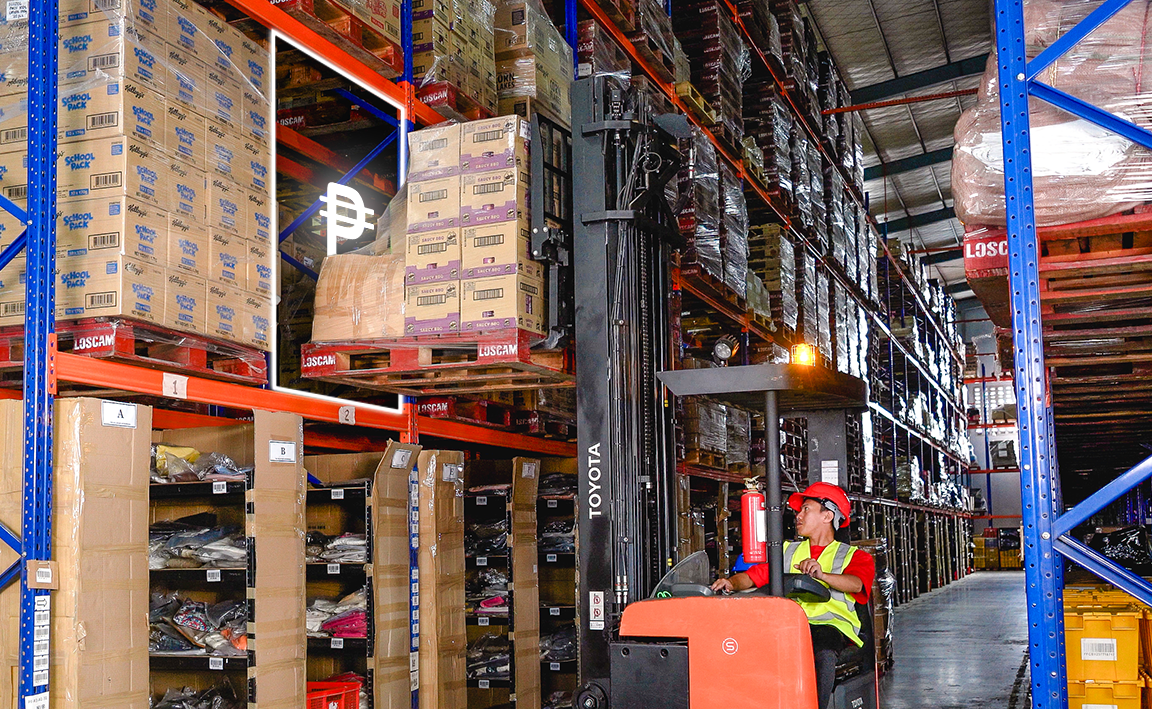
Pay-per-space fulfillment is a model where businesses pay based on how much storage space and order volume they actually use during each billing period, rather than committing to a fixed amount of floor area upfront. The fulfillment partner manages the warehouse infrastructure, staffing, and the end-to-end order process: from receiving your stock through to dispatch.
The specific billing unit varies by provider. Whether fees are calculated by pallet, shelf, cubic meter, or another measure should be confirmed with any provider before you sign up.
How the Model Typically Works
Your inventory is stored in a third-party warehouse shared with other clients. Rather than paying a fixed monthly amount for a dedicated area, you are billed based on the space your stock occupies during the billing period.
Order processing fees typically apply per order fulfilled, so your fulfillment costs scale with actual volume rather than a fixed monthly overhead. There is no long-term lease to negotiate or exit, which means you can adjust your usage as your business grows, contracts, or shifts focus.
How It Differs from a Standard 3PL Arrangement
Not all third-party logistics arrangements are usage-based. Some 3PL providers still require volume minimums, dedicated space allocations, or fixed-term commitments even within an outsourced model.
Pay-per-space fulfillment is designed specifically for variable volume, which makes it a better structural fit for SMEs and businesses with seasonal demand swings than a traditional 3PL contract with committed minimums. Individual providers set their own terms, so any minimum volume requirements that apply to a specific service should be confirmed directly with that provider before you commit.
Pay-Per-Space vs. Traditional Warehousing
The cost structure is the most visible difference between these two models, but it is not the only one. Flexibility, operational control, setup requirements, and long-term risk all factor into which approach makes more sense for where your business is right now.
Cost and Commitment
Traditional warehousing locks your costs into a fixed lease. You know what you will pay each month, but that amount does not change based on how much of the space you are actually using.
Pay-per-space billing adjusts with actual usage. In slow periods, your costs reflect lower inventory levels; in high-volume months, they scale up accordingly. This reduces the risk of paying for capacity you do not need.
The upfront capital requirement also differs. Traditional setups typically involve lease deposits, fit-out costs, and equipment investment before operations can begin. Outsourced fulfillment shifts the infrastructure investment to the provider, reducing or removing that upfront cost for your business.
One important caveat: at high, consistent volumes, a dedicated lease may eventually work out to be more cost-efficient per unit than outsourced fees. The comparison shifts as volume grows, which is part of the assessment when your business reaches that stage.
Control and Operational Flexibility
A traditional warehouse gives your business full control over layout, processes, staffing decisions, and how exceptions are handled. If your products have unusual requirements, you can build your own processes around them.
Outsourced fulfillment transfers operational management to the partner. You are relying on their systems, processes, and protocols, which is a reasonable tradeoff for most growing businesses, but it means understanding the partner's capabilities and constraints before onboarding, not after.
For businesses at an early to mid-growth stage prioritizing flexibility and speed to market over operational control, the tradeoff is typically favorable. For businesses with highly specialized handling requirements or the volume to justify a dedicated setup, the calculus may shift.
Who Benefits Most from a Flexible Fulfillment Model?
Pay-per-space fulfillment works well for specific business profiles, but it is not the right fit for everyone. Volume, product type, and operational complexity all affect whether outsourced usage-based fulfillment is more efficient than managing storage in-house.
Seasonal and Campaign-Driven Sellers
If your business sees sharp demand spikes during sale events such as Mega Sales on Shopee and Lazada, Ramadan, or the Christmas season, a flexible fulfillment model lets you scale storage up during peak periods and back down when volumes normalize.
That direct relationship between usage and cost means you are not carrying the overhead of peak-period capacity throughout the year. For sellers whose revenue is disproportionately concentrated in a few months, this can significantly reduce year-round cost exposure.
Growing SMEs and Multi-Channel Sellers
Businesses expanding their product range or adding sales channels (Shopee, Lazada, your own website) often need fulfillment infrastructure well before they can justify a full warehouse lease. Outsourced fulfillment gives you access to storage and order processing without waiting until volume is large enough to make a lease economically viable.
Multi-channel sellers also benefit from centralized inventory management. Rather than tracking stock separately across each platform, a fulfillment partner with integrated platform connections allows orders from multiple channels to flow through a single inventory source.
Businesses Testing New Products or Markets
Launching a new SKU or entering a new category carries volume uncertainty. Committing to a larger warehouse footprint before knowing whether the product will sustain consistent demand adds unnecessary financial risk.
A usage-based fulfillment model lets you scale storage in line with actual demand. If the product takes off, your storage arrangement grows with it. If it xdoes not, you have not locked into long-term overhead for a bet that did not pay off.
What to Look for in a Fulfillment Partner

Comparing storage rates is the starting point, but the quality of a partner's inventory management, platform connections, and handling processes will affect your order accuracy and customer experience far more than a price difference over time. Technology capability is part of that picture too, but the more useful question is whether a partner's systems adapt to how your business actually operates, rather than forcing you into theirs. Custom-Fit Fulfillment looks at why businesses tend to outgrow rigid fulfillment setups, and what to look for in a partner that scales storage and support to match your actual output instead of locking you into a fixed process.
Inventory Accuracy and Quality Controls
Order accuracy at scale depends on the process, not just people. Barcode-driven picking and packing checkpoints reduce mis-pick rates, a mistake that becomes more costly to fix as your volume grows.
Real-time inventory visibility helps you manage stock across platforms without manual reconciliation. If your partner's system does not surface stock levels accurately, you are still carrying the operational overhead you intended to outsource.
Before onboarding, understand the provider's process for handling damaged, defective, or returned stock. Returns processing varies significantly by provider, and if you are selling on multiple platforms with different return windows, this process needs to be clearly established upfront.
Platform Integrations and Special Handling
Platform compatibility is non-negotiable for multi-channel sellers. Confirm with the provider that they support the specific platforms you sell on, not just a general list. Custom packing configurations and promotional bundle handling (kitting, inserts, gift packaging) should also be confirmed in advance, including any additional fees that apply, as these capabilities and their terms vary by provider and service arrangement.
#NinjaTip: Before committing to a fulfillment partner, ask them to walk you through what happens when one order is short-picked: the wrong item goes in the box, or an item is missing entirely. How quickly the error is caught, who flags it, and what the resolution process looks like will tell you more about their actual order accuracy than any percentage they quote you upfront.
How Ninja Fulfillment Supports Flexible Storage in the Philippines
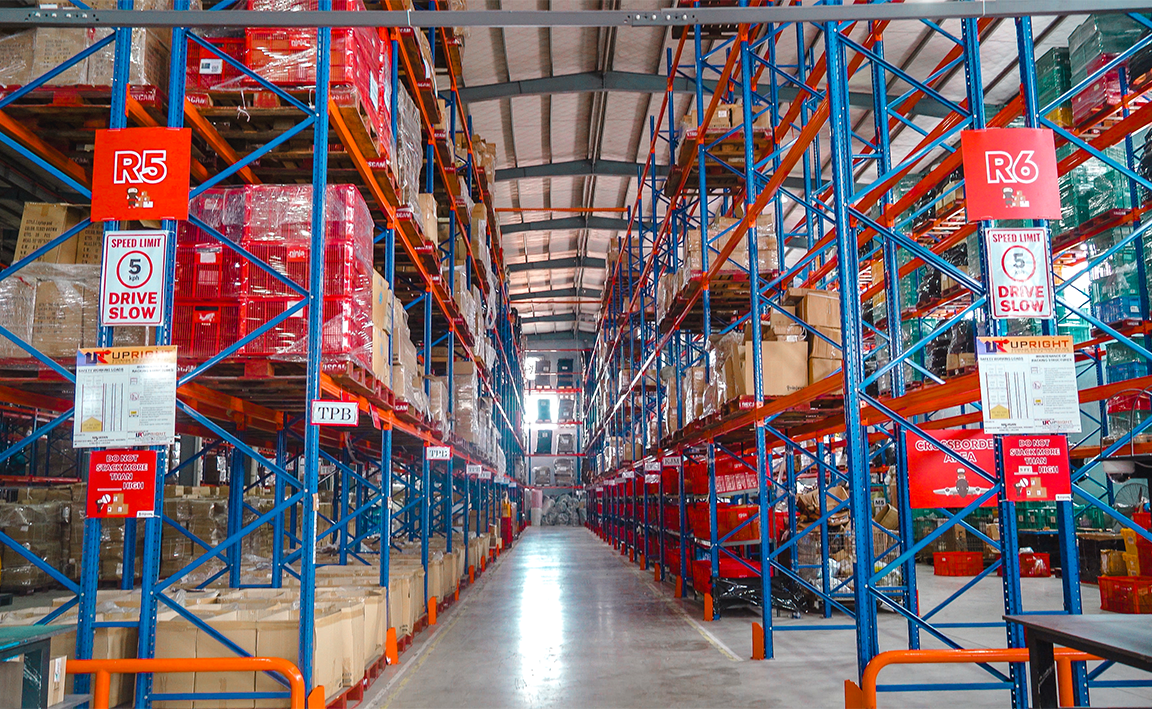
Ninja Van offers integrated warehousing and order fulfillment services for Philippine businesses, covering storage, picking, packing, and order dispatch. Storage options include ambient and cold, suited to a range of product types.
Quality checks are built into the process prior to system putaway, and orders are monitored via CCTVs at the packing stations. Barcode-driven picking and packing checkpoints support order accuracy throughout the fulfillment process.
Platform integrations include Shopee, Lazada, TikTok Shop, Shopify, WooCommerce, eBay, Zalora, and Zilingo.
A daily order fulfillment cut-off applies, and barcoding is required for all products. Both requirements should be factored into your operations planning when evaluating fit.
What to Confirm Before Onboarding
Before committing to Ninja Fulfillment, the Ninja Van team will walk you through the setup for your account. Have the following ready to align quickly:
- Billing structure preference, including storage fee cycle and any volume considerations for your account
- Storage type for your product range, whether it is ambient or cold, based on your SKUs
- Batch tracking and expiry-date handling requirements, if applicable to your products
- Custom packing and promotional bundling needs, including scope and any applicable fees
- Returns handling expectations for defective, damaged, or returned stock
- Additional platform integrations beyond the confirmed list above
- Preferred 3PL or last-mile delivery partner for parcel handover
Getting these details sorted upfront means your operations are ready to run from the moment your stock arrives. Talk to the Ninja Van team to see if Ninja Fulfillment fits your product requirements and order flow, or get in touch to discuss onboarding when you are ready to commit.
FAQs on Pay-Per-Space Fulfillment
What is pay-per-space fulfillment?
Pay-per-space fulfillment is a model where businesses are charged based on the actual storage space and order volume they use each billing period, rather than committing to a fixed floor area through a lease. The fulfillment partner manages the warehouse, staffing, picking, packing, and dispatch. Your costs reflect real usage rather than a fixed monthly overhead.
How is pay-per-space fulfillment different from a traditional warehouse?
Traditional warehousing ties you to a fixed lease on a set amount of space, with costs that stay constant regardless of how much of that space you are actually using. Pay-per-space billing adjusts with actual usage, so your storage costs scale down during slow periods and up during high-demand months. The key tradeoff is flexibility versus control: a traditional warehouse gives you full operational control, while outsourced fulfillment transfers that management to the partner.
Is pay-per-space fulfillment suitable for small businesses in the Philippines?
It can be, particularly for SMEs with growing or seasonal inventory who cannot yet justify the cost of a full warehouse lease. The usage-based structure reduces the risk of paying for capacity you do not need. Minimum volume requirements and service terms vary by provider, so confirm the specifics directly with any fulfillment partner you are evaluating before committing.