
Boosting Philippine Scaling Businesses with Smart Fulfillment

.webp)
Scaling businesses across the Philippines handle many daily tasks tied to stock movement, warehouse work, and parcel dispatch. Many run into recurring problems such as messy stock records, slow handoffs, missed dispatch windows, and limited access to reliable facilities. These issues can hold back growth, especially when orders rise or new channels open.
A strong fulfilment setup helps scaling businesses run more smoothly by giving them clearer processes for stock, packaging, and dispatch. With the right workflow in place, teams avoid last-minute scrambles and respond faster to demand shifts. This article looks at common pain points, practical ways to organise daily work, and examples of how tools used in Ninja Van’s logistics setup fit into the wider fulfillment landscape in the Philippines.
Understanding Scaling Business Logistics Challenges

The Philippines has become the fastest-growing e-commerce market worldwide, recording 24.1 % growth in online sales in 2023. This rapid rise brings more pressure on scaling businesses to manage stock accurately, process orders faster, and reach buyers situated in a wide mix of urban, suburban, and island locations.
Despite this momentum, many businesses still rely on manual stock handling. Manual work often leads to gaps between actual supply and recorded counts, triggering overselling, missed pick-ups, and repeated adjustments within the warehouse.
Traffic conditions, port delays, and unpredictable weather patterns create added pressure on delivery windows. Opensend’s data summary highlights that 40% of global online shoppers expect to receive their orders exactly when promised, and 69% are less likely to buy again after a late delivery.
Logistics insights discussed in how third-party logistics transforms business operations illustrate how various bottlenecks can slow teams down. A clearer workflow helps scaling businesses reduce wasted effort and move goods across cities or islands with fewer errors and smoother routines.
The Components of Effective Fulfillment
Below are five areas that form the backbone of a smoother daily rhythm for scaling businesses.
1. End-to-End Fulfillment: Streamlining Operations
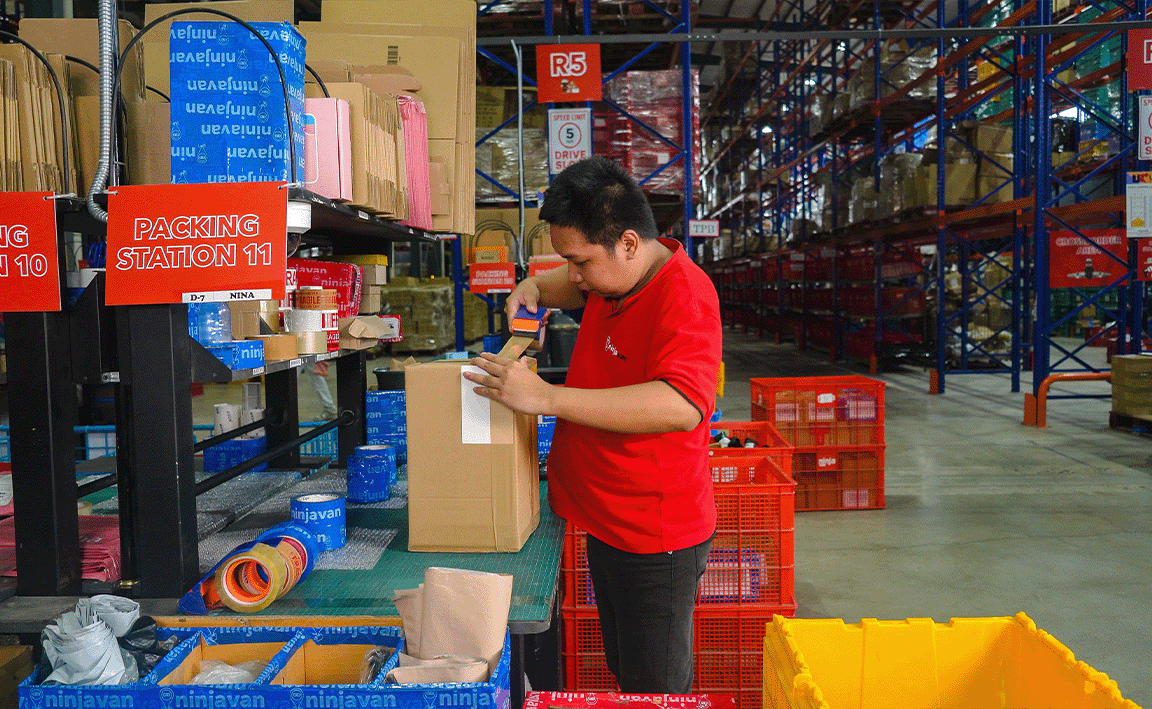
End-to-end fulfillment covers receiving incoming goods, storing them in an organised area, picking and packing, basic checking, dispatch work, and returns. A unified workflow lowers the chance of mis-packs, misplaced items, and delays caused by manual cross-checking.
Facilities used in setups like Ninja Van’s fulfillment warehousing show how a single system can manage these linked steps. Instead of handling stock across scattered rooms or using several tools, teams work within one central workflow. This helps maintain steadier turnaround times even when order volume rises.
Many scaling businesses also deal with product bundles, fragile items, or sets with multiple components. A coordinated receiving and picking routine helps maintain accuracy while reducing packing errors that lead to returns or negative buyer feedback.
2. Technology-Enabled Inventory & Order Management
Digital dashboards help scaling businesses see stock levels in real time and track batches accurately. This shift is becoming more common as digital adoption rises.
When synced with a seller’s own platform, or marketplaces such Shopee, Lazada, Temu, and TikTok stores, dashboards help avoid double-selling and uneven stock distribution across sales channels. Many sellers also gain clarity on slow-moving items, seasonal patterns, and order dips that might need attention.
Tools found in Ninja Van’s warehousing system show how digital visibility reduces manual checks. Instead of doing cycle counts repeatedly, teams rely on a single dashboard to guide restocks, packing sequences, and order validation. This supports steadier workloads and lowers the stress linked to peak seasons.
Digital visibility also eases coordination for growing teams. New staff can follow a guided workflow inside the dashboard instead of relying on verbal instructions, which often vary across shifts.
3. Flexible and Scalable Fulfillment
Scaling businesses often see sudden jumps in order volume during payday weekends, creator promotions, bulk corporate orders, or special launches. A flexible setup helps adjust storage space, manpower, and capacity without long-term commitments.
Modular setups used in Ninja Van’s fulfillment facilities give growing teams breathing room during busy periods. Instead of rushing to rent more warehouse space, businesses gain access to additional capacity inside an existing facility.
A scalable approach also helps sellers test new SKUs or introduce limited-edition items without the risk of overcrowding. If an item performs well, capacity can be adjusted as demand increases. If not, the business avoids sunk costs tied to unused space.
4. Nationwide Reach and Market Testing
A wide delivery network lets scaling businesses reach more towns and cities without heavy infrastructure spending. This reach often appears in initiatives such as Ninja Van’s work with LGUs and collaborations with banking groups that aim to strengthen logistics access. These projects help small and scaling businesses participate more actively in the digital economy.
For B2B deliveries or restocking cycles, sellers can also look at Ninja Restock as an example of a route-planning workflow that covers a wide mix of distribution points.
The ability to test new markets without setting up local storage is valuable. Businesses can send small batches to gauge pick-up rates, customer reviews, and repeat purchase behavior in unfamiliar regions.
5. Quality Assurance and Automation
Packaging, labeling, and parcel integrity influence buying behavior. According to research, shoppers link packaging conditions to their willingness to buy again. This shows how much unboxing quality affects the overall purchase experience.
Scan-to-print labels, barcode checks, and item validation steps help create a smoother flow. These checks appear throughout Ninja Van’s warehousing process to lower mis-packs and limit returns tied to wrong items or damaged goods.
Automation also helps new staff learn routines faster because the system guides them through pack steps, label printing, and dispatch zones. This reduces onboarding time and keeps daily work consistent.
The Impact on How Fulfillment Drives Scaling Business Growth

A well-organised fulfillment setup helps scaling businesses reduce manual work, maintain steady dispatch times, and respond to sudden demand spikes with less stress. Predictable handling times also help teams plan promotions more confidently.
Due to this, most of the top ecommerce operations target on-time delivery rates above 95%, while the usual range sits around 85–90%. Consistent dispatch encourages stronger reviews, better seller scores, and higher repeat purchase rates.
Practical Fulfillment Strategies for Scaling Businesses
- Use sturdy packaging, inserts, and leak-proof seals
- Track stock levels and batches closely
- Combine scheduled restocks with on-demand movement
- Work with a reliable 3PL partner for fulfillment and last-mile delivery such as Ninja Van to benefit from warehousing support and local delivery expertise across condos, provincial routes, and retail locations.
- Review logistics providers with wide coverage and dependable digital tools. The setup should support integration with a seller-preferred 3PL for last-mile delivery, such as Ninja Van Philippines.
Building a Growth-Ready Fulfillment Strategy
Fulfillment acts as a stepping stone for scaling businesses expanding into new towns, channels, or product categories. Flexible setups, smoother adjustments during busy cycles, and clearer stock visibility help teams respond well to rising demand and evolving buyer habits.
The ecosystem used in Ninja Van’s warehousing and delivery network shows how different parts of fulfillment can work together during multiple stages of business expansion.
By choosing partners familiar with local logistics conditions, scaling businesses gain more time for product development, customer engagement, and long-term planning while keeping daily dispatch steady and predictable.