
Compliance-Ready Last-Mile: Meeting Bidding Requirements for Finance and Government

.webp)
In the financial and government sectors, the weight of a single delivery is immense. When a package contains a credit card, an insurance policy, or a national ID, a lost item is far more than a logistical delay. It represents a person’s financial access or their legal identity.
For the organizations sending these items, a failure in the last mile is a major security breach and a failure to meet regulatory standards. This is why the last-mile journey is the most sensitive part of their operations. These institutions are not looking for a general courier; they need a partner that meets the strict, verifiable standards required for government audits and competitive bidding.
The primary difficulty for these sectors is managing high-volume delivery while maintaining a transparent record of every movement. Standard delivery services often lack the specialized protocols needed to handle sensitive documents at scale. To secure high-value contracts, enterprises must prove they have an unbroken chain of custody. This is why Ninja Dash is the specialized solution for organizations that must prove accountability to meet government and finance bidding requirements.
The Compliance Imperative: Why Standard Delivery Fails
Securing a high-volume contract for card or document distribution requires more than just a large fleet. In the bidding process, government agencies and banks prioritize a partner’s ability to demonstrate a verifiable security protocol.
This is a legal necessity under the Data Privacy Act of 2012. While often associated with digital data, the law applies to personal information in all forms, including physical documents and printed records.
The National Privacy Commission (NPC) frequently notes that "unauthorized disclosure" and "personal data breaches" are among the most reported complaints in the country. A lost document is a reportable data breach that can result in heavy fines and a total loss of public trust. Standard delivery models often fall short because they were built for general e-commerce, not for the strict data integrity standards of the finance sector.
Common Failures in Standard Delivery:
- Manual POD Risks: Paper-based signatures are easily lost, damaged, or even altered, making them impossible to audit with total accuracy.
- Lack of Digital Trails: Standard couriers often cannot provide the instant, tamper-proof data required by modern standards.
- Missing Geo-Tagging: Without knowing exactly when and where a delivery occurred, a logistics provider cannot meet the modern compliance requirements of the Philippine financial industry.
- Inadequate RTS Workflows: If a credit card cannot be delivered, the protocol for returning it to a secure vault must be just as strict as the initial dispatch. Standard services often lack these specialized return-to-sender (RTS) workflows.
The Pillars of Secure, Bidding-Ready Document Logistics

To meet the high standards of the public and financial sectors, a logistics strategy must be built on three specific pillars: digital proof, scalability, and an unbroken chain of accountability.
1. Digital Proof of Delivery (ePOD) as a Compliance Tool
In a bidding scenario, electronic Proof of Delivery (ePOD) is a mandatory compliance tool. This is justified by the rising risks of identity theft.
- Audit Readiness: An ePOD is a timestamped, geo-tagged record of a delivery. It provides the audit trail that regulators like the Bangko Sentral ng Pilipinas (BSP) demand.
- Dispute Resolution: For banks, this means having the ability to immediately resolve a dispute if a customer claims they never received their card.
- Data Integrity: The data is stored securely and can be pulled for audits months after the delivery was made.
2. Bulk Upload and Centralized Tracking for Scale
Managing the distribution of thousands of unique documents daily is an immense operational task.
- Manifest Integration: Accuracy often drops as volume increases, which is unacceptable for sensitive items. To maintain precision at scale, the logistics system must allow for bulk manifest data uploads.
- Individual Oversight: By uploading manifest data directly into a centralized dashboard, an organization makes certain that every single document is tracked individually from the start. This operational benefit allows for faster processing and ensures that all tracking data is auditable from a single location.
- Single Source of Truth: This ensures that all tracking data is auditable from a single location, whether you are shipping 100 or 100,000 documents.
This ability to scale without losing data integrity is a mandatory feature for winning large-scale government bids where the volume of national IDs or official documents can reach millions of units.
3. End-to-End (E2E) Chain of Custody
The "handoff risk" is where most logistics failures occur. When a document moves between multiple providers, from the printer to a sorter and finally to a delivery driver, the risk of loss increases.
- Unbroken Chain: An End-to-End (E2E) model removes this risk by keeping the entire journey under one provider.
- Vault-to-Hand Security: This chain starts the moment items are picked up from a card printer or agency vault and continues until they are in the hands of the verified recipient.
- Accountability: A single provider means a single point of contact and no "blind spots" in the journey, a high-priority benefit for government agencies during the bidding process.
Operational Security in the Philippine Context

Logistics in the Philippines requires a deep understanding of local geography and security requirements. For sensitive documents, the verification protocol must be strict.
Mandatory Security Protocols:
- ID Verification: Mandatory ID checks make certain the package reaches the correct recipient every time.
- Tamper-Proof Updates: Banks require real-time updates that cannot be altered. Ninja Dash provides this through secure tracking that can be pulled for internal or regulatory audits at any time.
- Specialized Packaging: The system manages the complexities of document-specific SKUs, such as specialized envelopes and secure card packages.
A notable example of this high-volume precision is seen in the work done for Shell Pilipinas Corporation. Managing large-scale distribution requires a strict 21-day SLA for economy and high-volume rollouts. For a single-SKU rollout at this scale, the E2E service model ensures that every item is accounted for within the required timeframe.
This level of operational discipline is exactly what government and finance sectors look for when evaluating potential partners. It proves that the provider can handle the pressure of a nationwide rollout while hitting strict performance targets.
Building a Compliance-Driven Document Strategy
If your organization is preparing for a high-volume rollout or a competitive bid, your logistics strategy should focus on three areas:
- Audit Your RTS Rates: High Return-to-Sender (RTS) rates are often a sign of poor delivery execution or inaccurate address data. In the document sector, an undelivered item is a compliance risk. You need a partner that minimizes RTS through better address verification and recipient coordination. A lower RTS rate means fewer sensitive documents are sitting in transit, which reduces your overall security risk.
- Prioritize ePOD Integration: Make certain that your logistics partner’s ePOD system can integrate directly with your internal compliance and customer service platforms. This allows your team to resolve disputes or audit requests in seconds rather than days. When your internal systems talk directly to the logistics provider's data, you remove the manual work that often leads to data entry errors.
- Look for a Nationwide Network: Security and compliance protocols must be consistent across the entire country. A partner with a nationwide hub network ensures that a delivery in a remote province follows the same strict security steps as a delivery in Metro Manila. You cannot afford to have "weak links" in your supply chain where security protocols are relaxed just because a location is hard to reach.
Reliability as a Compliance Standard
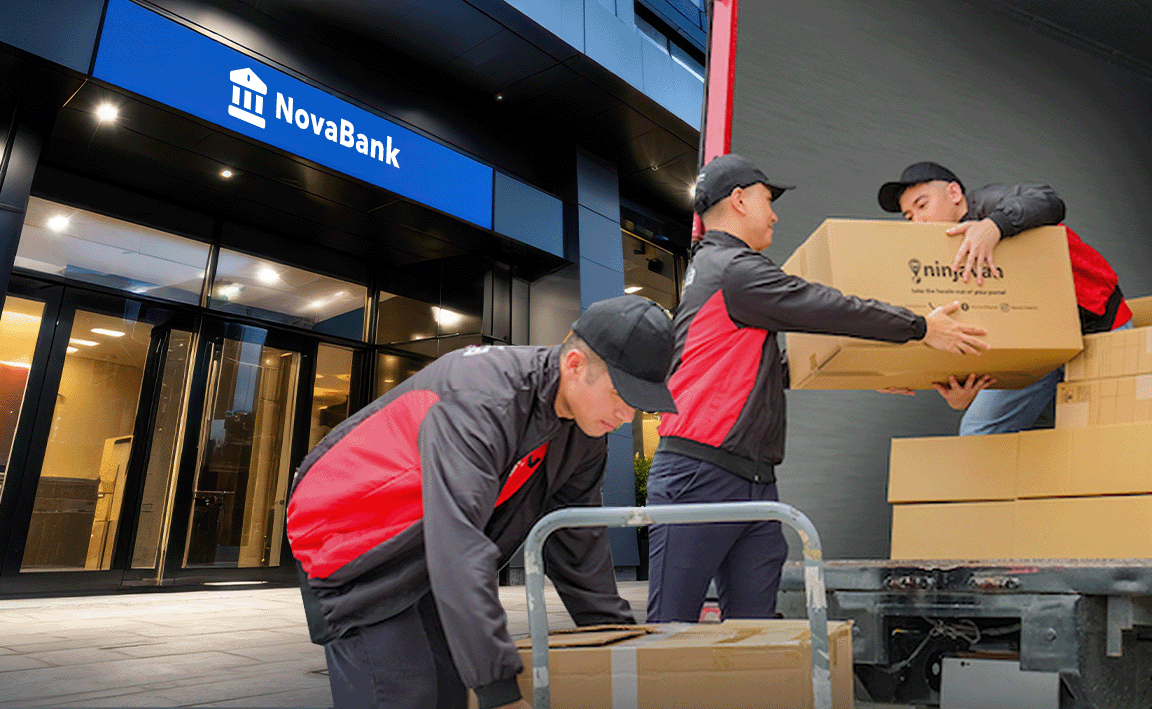
For banks, insurers, and government agencies, logistics is more than just moving packages. It is a matter of trust, security, and regulatory compliance. The ability to prove a secure chain of custody and provide digital proof of every delivery attempt is what makes a partner bidding-ready in the current market. Without these technical foundations, an organization cannot meet the high-priority security standards required by the Philippine government and financial regulators.
Reliability is the ultimate compliance standard. Ninja Van offers the specialized, tech-enabled last-mile service required to handle the Philippines’ most sensitive deliveries. With features like ePOD, bulk tracking, and a proven E2E model, it provides the verifiable accountability needed to meet the highest standards of the finance and government sectors.