
DC or Direct-to-Store for Modern Trade Restocking in the Philippines?

.webp)
Modern trade does not punish you for being slightly late. It often pushes you to the next receiving cycle.
That is the difference between “we delivered” and “the shelf was stocked.” As door count expands, the restocking model you choose directly affects receiving-window compliance, cost per drop, and store-level availability.
Some FMCG teams default to DC-led distribution for simplicity. But as networks grow beyond core metros, visibility gaps and cadence issues begin to surface. Direct-to-Store has re-emerged for brands that want tighter control over replenishment timing.
This guide breaks down when DC-led works, when Direct-to-Store makes sense, and how most FMCG brands scale through a hybrid approach.
Start Here: What Are You Really Optimising For?
The Philippine FMCG landscape is larger than it looks. While business records show around 20 formally registered FMCG manufacturers, the real ecosystem is far broader when you include importers, sub-brands, and distributor portfolios. The competition for shelf space is dense, and every door matters.
Yet many teams still compare transport rates in isolation.
Modern trade performance is not defined by the cheapest truck. It is defined by cadence, compliance, and predictability across a growing store network.
Most FMCG teams are optimizing for four outcomes:
- On-shelf availability
- Delivery within receiving windows
- Stable cost-per-drop as doors increase
- Network scalability without operational strain
Quick self-check:
- If your problem is repeated stockouts despite DC compliance, it’s a cadence issue.
- If your problem is rising logistics cost as you add stores, it’s a routing and model issue.
- If your problem is missed windows and store rejections, it’s a calendar discipline issue.
The answer is rarely “add more trucks.” It is usually “adjust the model and lock the schedule.”
The DC-Led Model: Strategic Simplicity vs. The Visibility Gap
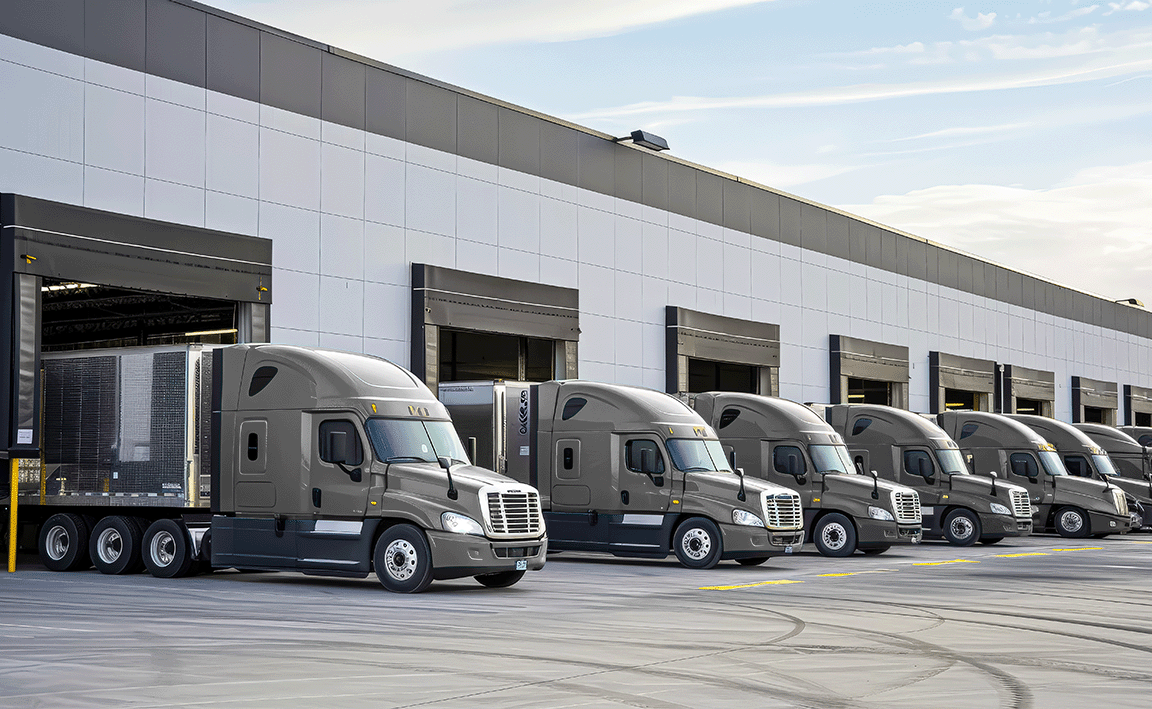
In a DC-led setup, inventory flows from your warehouse to the retailer’s distribution center. From there, the retailer manages replenishment to stores.
You fulfill once. The retailer handles the rest.
When DC-Led Model Works
DC-led works best when:
- SKUs are high-volume and stable
- Retailer DC operations are efficient
- Demand patterns are predictable
- Store exceptions are minimal
For these conditions, centralization reduces complexity.
The DC Trap
The challenge appears when your network expands or when you enter Tier 2 and Tier 3 regions.
Common friction points include:
- DC handling and compliance fees adding up
- Slow feedback loops from store-level performance
- Limited visibility into which stores are actually stocked
- Inability to control replenishment cadence
The Real Impact
You hit the DC on time.
But you lose sales at the store level because you no longer control timing or replenishment frequency.
Over time, this disconnect affects shelf share, promo performance, and retailer confidence.
Direct-to-Store: When It Wins Especially for Modern Trade Expansion
Direct-to-Store (DTS) means planned replenishment deliveries from your warehouse or hub directly to stores.
Key characteristics:
- Fixed delivery days
- Defined receiving windows
- Structured replenishment cycles
- Store-level visibility
It is not ad-hoc truck booking. It is scheduled, repeatable execution.
Why It’s Coming Back
As FMCG networks grow, brands want:
- Greater control over cadence
- Fewer unexplained shelf gaps
- Better promo timing alignment
- More predictable store performance
Direct-to-Store offers accountability at the store level.
Direct-to-Store Wins When You Need Cadence and Control
DTS is often the right move when:
- Door count is expanding quickly
- Per-door volume is smaller
- Replenishment frequency increases
- Receiving windows are repeatedly missed
- Store availability varies by cluster
Modern Trade is not about one successful delivery. It is about repeating the same cycle reliably across hundreds of doors.
In one Ninja Restock case involving a leading FMCG company, deliveries covered more than 300 modern trade doors with scalability toward 700 doors. The reported result included at least 30 percent savings on LTL shipments through co-loading and optimized routing. This shows how structured scheduling impacts cost per drop at scale.
Direct-to-Store Wins When Receiving Windows Are Tight
Receiving windows changes the economics of delivery.
A late truck is rarely “slightly late.” It often becomes “next cycle.”
That means:
- Missed window = shelf gap
- Shelf gap = lost promo impact
- Lost promo impact = retailer friction
If receiving windows are strict, structured Direct-to-Store with disciplined routing reduces exposure.
Direct-to-Store Wins When You’re Serving Many Small-Format Doors
FMCG demand in the Philippines moves fast. Filipino consumers made an estimated 16 billion FMCG purchase instances in a recent year. That volume does not wait for flexible scheduling.
Small-format stores create pressure quickly.
Each drop is small.
But the network is large.
Without consolidation, routing logic, and stable schedules, cost-per-drop rises quickly.
This is where multi-drop planning, co-loading, and store-ready sorting become essential.
A case study involving Pickup Coffee illustrates this pattern. As outlets expanded beyond Metro Manila, the challenge shifted from moving goods to maintaining a predictable replenishment cycle across locations. Structured B2B restocking supported that growth without requiring heavy fleet ownership.
The Hybrid Model: How Most FMCG Brands Actually Scale Modern Trade
In reality, DC vs Direct-to-Store is rarely all-or-nothing.
Most FMCG teams operate a blended model segmented by SKU, geography, or store type.
The goal is simple:
Use DC where it genuinely helps.
Use Direct-to-Store where it protects cadence and availability.
Hybrid Rule 1: Keep DC for High-Volume, Stable, Easy-to-Replenish
DC-led works well for:
- High-velocity SKUs
- Stable demand
- Minimal store-level exceptions
- Strong DC compliance performance
These flows benefit from centralization.
Hybrid Rule 2: Use Direct-to-Store for High-Risk Availability Clusters
Shift to DTS when:
- Fast movers frequently stock out
- SKUs are promo-critical
- DC replenishment visibility is weak
- Specific regions consistently underperform
This protects availability where it matters most.
Hybrid Rule 3: Segment by Geography and Door Type
Segmentation examples:
- Metro clusters vs Tier 2–3 doors
- Big-box stores vs convenience formats
- High-dwell receiving stores vs efficient stores
Start small. Test one region or one retailer cluster first.
If You Go Direct-to-Store, Here’s the Operating Model That Actually Works

Direct-to-Store only works with discipline.
At minimum, you need:
- A locked restock calendar
- Sorting discipline
- Routing logic
- Clear visibility
Without structure, DTS becomes expensive and reactive.
Step 1: Lock the Restock Calendar, Not “Book Trucks Weekly”
Define:
- Store clusters
- Fixed delivery days
- Receiving windows
- Backup cycles
Good looks like stable cadence across weeks, with fewer last-minute adjustments.
Step 2: Enforce Pre-Alert and Pickup Discipline
Pre-alert matters because predictable volume enables:
- Proper sorting
- Route planning
- Load optimization
Define:
- Pre-alert cut-offs
- Pickup windows
- Planned lead times
Structured restocking models such as those used in Ninja Van Philippines operate around scheduled pickup windows and planned flows rather than ad-hoc dispatching.
Step 3: Make Shipments Store-Ready Through Cross-Dock Sorting
Store-ready shipments:
- Reduce receiving disputes
- Speed up store acceptance
- Lower rejection rates
This requires:
- Store-level labeling
- Scan-based validation
- Clear exception handling
Cross-dock and scan workflows are often used in structured restocking networks to maintain sorting accuracy at scale.
Step 4: Build Routing Logic That Accounts for Real Life
Effective routing considers:
- Load utilization (CBM per route)
- Dwell time per store
- Store radius and distance
- Consolidation and co-loading fit
Better routing improves utilization, reduces failed routes, and lowers premium trucking reliance.
Co-loading and route optimization are core components of structured restocking networks such as Ninja Restock.
The Economics That Matter: How to Compare DC vs Direct-to-Store Fairly
Teams often compare DC fees against trucking costs.
That comparison ignores shelf impact and hidden operational penalties. Many brands first identify these hidden costs while reviewing their broader supply chain challenges.
Use this lens instead.
Metric 1: Cost-per-Drop (Not Cost-per-Truck)
As doors increase, cost-per-drop becomes the real scaling metric.
Track:
- Cost-per-drop by cluster
- Week-to-week variance
- Frequency of premium or emergency runs
Metric 2: Missed Receiving Window Cost
Late deliveries often miss shelf timing entirely.
Track:
- Missed windows
- Store rejections
- Reschedule frequency
These represent hidden lost sales.
Metric 3: Dwell Time and Route Completion Rate
A few high-dwell stores can break an entire delivery route.
Track:
- Average dwell time by store type
- Route completion rate
- Exception frequency
Operational friction compounds as doors expand.
Pick the Model That Protects Shelf Outcomes, Not Just Logistics Simplicity
DC-led works best for stable, high-volume flows.
Direct-to-Store works best for cadence, control, and high-risk availability clusters.
Hybrid is how most FMCG brands scale in reality.
Modern Trade growth is built on predictable schedules, store-ready execution, and routing discipline, not just moving goods from one warehouse to another.
For FMCG teams expanding modern trade doors in the Philippines, exploring structured B2B restocking options such as Ninja Restock can support planned replenishment without the burden of building and managing a dedicated fleet.